 Web DevelopmentTop WordPress Web Development Services to ConsiderThe WordPress web development services worth paying for: custom builds, design, themes, plugins, WooCommerce, speed, security, SEO and migration, and how to choose a team.
Business Website Design Dubai
What a business website in Dubai should do, template vs custom builds, what drives cost and time, platforms, SEO and conversion, and choosing an agency in Business Bay.
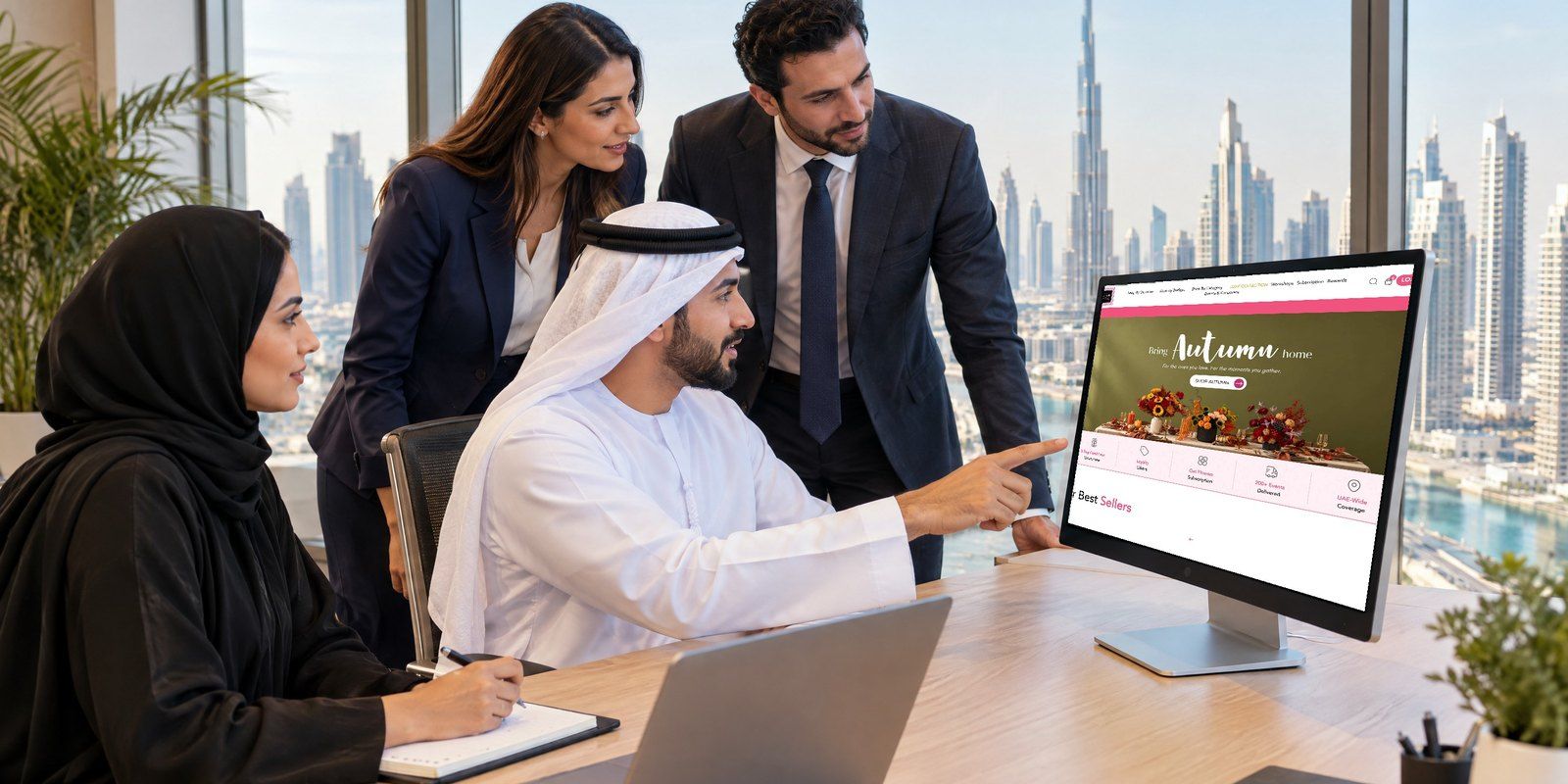
Business website design in Dubai is about building a site that earns trust quickly and turns visitors into enquiries, calls, bookings or sales. It has to work properly on a phone, load fast, explain what you do in plain terms and, where your clients need it, read well in Arabic as well as English. For a firm in Business Bay, where buyers compare several companies before they pick up the phone, professional web design is part of how you win work, not decoration.
What a business website in Dubai has to do
A business website has three jobs. It tells the right visitor who you are, gives them a reason to believe you, and makes the next step obvious. Everything else on the page should serve one of those three.
That sounds simple, but the requirements change with the business. A startup usually needs a lean site that explains one offer and collects leads. An established firm often needs a redesign that refreshes the brand without throwing away years of search visibility. A shop needs secure payments, product filters, stock control and a checkout that works on a small screen.
So the work starts with the business goal, not with colours and layouts. Design, development, SEO, content and support after launch all have to pull in the same direction. We regularly see sites that look good and still fail, because visitors cannot find what they came for, forms are awkward, pages are slow or search engines cannot make sense of the structure. The site that works is the one that feels right to a buyer and is easy for your own team to run.
Website design in Business Bay starts with trust
Business Bay is one of the busiest commercial districts in Dubai, and the companies there compete for local and international attention. A prospect might reach you through Google, a referral, LinkedIn, a directory listing, a QR code on a brochure or a paid ad. Wherever they come from, your website is where they decide whether you look established and easy to deal with.
Trust on a site is built from small things that add up. A clear headline on the homepage confirms they are in the right place. Service pages answer the questions a buyer actually asks. Case studies, project galleries, certifications, team pages or a list of sectors served give proof without cluttering the page. Contact options should feel local: a phone number, WhatsApp, a short enquiry form, a map and a booking option where it makes sense.
Most Dubai companies also serve more than one audience. Residents, visitors, regional clients, international firms and Arabic speaking customers may all land on the same page. If you need Arabic and English, plan for both from day one, including the right to left layout Arabic requires. Adding a second language to a site that was never built for it is slow and usually shows.
What goes into professional web design
Professional web design combines strategy, user experience, visual identity, technical build quality and conversion. If any one of these is weak, the whole site feels less credible or harder to use.
A properly planned business website project usually covers:
- Discovery and positioning: agreeing the audience, the offer, the competition, the key pages and what counts as a conversion before any design work begins.
- Information architecture: a navigation that takes people from first interest to action without detours.
- UX and UI design: layouts that are easy to scan, accessible and recognisably your brand.
- Responsive development: a site that behaves properly on phones, tablets and desktops.
- SEO foundations: page structure, headings, metadata, internal links and the technical set-up that lets search engines crawl and understand the site.
- Content support: turning your services, process and proof into clear web copy.
- CMS set-up: a simple way for your team to update pages, posts and images.
- Testing and launch: checks on speed, forms, mobile behaviour, redirects, analytics and security before the site goes live.
The real difference between a basic site and a professional one is the planning. A basic build fills a template and publishes it. A professional project asks what the visitor needs to believe, which questions must be answered on the page, which action matters most and how the site keeps supporting sales after the first visit.
Template, semi-custom or fully custom
Not every business needs the same level of build. A template site is a sensible choice when speed and budget come first, for example a new company testing an idea or getting its first presence online. A custom site makes more sense when the brand needs to stand apart, the services are complex, the site connects to other systems, two languages are essential or growth plans are ambitious.
Here is how the main Dubai web design options compare:
| Option | Best for | Main benefit | Main limit |
|---|---|---|---|
| Template website | New or small businesses that need to launch quickly | Lower cost and quick set-up | Looks less distinctive and is harder to adapt later |
| Semi-custom website | Growing firms that want a closer brand fit without a full custom build | A balance of cost, design control and speed | Still shaped by the underlying theme or components |
| Fully custom website | Established firms, premium brands, complex services, online stores and bilingual sites | Stronger brand presence, tailored UX and room to grow | Higher cost and a longer build |
| E-commerce website | Retailers, product companies, booking led businesses and packaged services | Online sales, payments and product management | Needs ongoing attention to operations, security and maintenance |
Be honest about where the business is today and where it will be in two or three years. A cheap route is fine for a short campaign page, but it costs more in the end if the whole site has to be rebuilt. A fully custom build pays off only if you have the content, budget and people to keep it running well. Our guide to website design for small businesses in Dubai looks at the lean end of this table in more detail.
What drives the cost of business website design in Dubai
Costs vary widely, so the useful question is what is driving the number in front of you. A template site costs far less than a custom one, and the figure rises again once you add complex features, system integrations, bilingual content, online payments or bespoke functionality. The best quote is rarely the lowest. It is the one that states clearly what is included, what is not, and how the site supports your goals.
Page count is only part of the picture. A five page site with custom UX, art directed photography, motion, two languages and a CRM connection can take more effort than a larger but simple brochure site. Copywriting, SEO migration, booking tools, payment gateways, product catalogues, accessibility work, speed optimisation and ongoing maintenance all move the final cost.
When proposals arrive, ask each agency to itemise them. Design, development, copy, SEO set-up, hosting, plugins, integrations, maintenance and post launch support should each have their own line. That way you compare value rather than headline totals.
Use this checklist when reviewing a proposal:
- Scope: are the pages, features, languages, revision rounds and deliverables written down?
- Ownership: will you own the design files, site assets, content, domain and CMS access?
- SEO protection: on a redesign, are redirects, metadata, URL structure and analytics included? Our site migration service covers exactly this.
- Mobile quality: is testing on real devices part of the scope, or just assumed?
- Content: who writes, edits, uploads and signs off the copy?
- Support: what happens after launch if a form breaks, a plugin needs updating or your team needs training?
- Room to grow: can the site take new pages, languages, products, locations or campaigns without a rebuild?
This matters most when comparing website development in Dubai, because the same phrase on two proposals can describe very different pieces of work.
How long a build takes, and why
The timeline depends on three things: the size of the project, how quickly decisions get made and when the content is ready. Larger builds with custom functionality, online stores, two languages, several layers of approval, integrations or a full SEO migration naturally take longer than a small brochure site. A good share of the schedule sits with the client, in approvals and content, not only with the agency.
Most projects move through the same stages in this order:
- Discovery and planning: goals, audience, sitemap, technical needs, competitors and the content required.
- Content and wireframes: page flow, user journeys, draft copy and layout direction.
- Visual design: the homepage, key inner pages, mobile views, a design system and revisions.
- Development: CMS set-up, front end build, integrations, forms, language set-up and responsive build.
- Testing and launch: quality checks, speed checks, SEO foundations, analytics, redirects, training and go live.
The order is what matters. If the sitemap changes after the design is signed off, or major copy is rewritten during development, the project slips. If your team gathers brand files, service details, images, logins and approvals early, it moves far more smoothly.
Choosing a platform that suits the business
Pick the platform based on what the site has to do after launch. WordPress suits most content led business sites because it handles service pages, blogs, landing pages and multilingual plugins, and it is easy to edit. Shopify and WooCommerce are the usual choices for online stores. Magento can fit larger or more complex catalogues, and Drupal suits structured, enterprise style content.
When a project needs custom workflows, a web app, a client portal or dashboards, frameworks such as React, Laravel or Angular come into play. They are powerful, but they should not be chosen because they sound modern. A straightforward service business is usually better off with a stable CMS its team can manage than with a custom stack that needs a developer for every small change.
The practical test is to ask who will be running the site six months after launch. If your marketing team will publish posts, build campaign pages, swap banners and update services often, the CMS is the priority. If the site connects to internal systems, payment providers, inventory, booking software or a CRM, reliability and clean integrations come first.
Build SEO and conversion into the plan from day one
A site can look excellent and still underperform when SEO and conversion are bolted on at the end. Search visibility depends on structure, crawlability, content that matches what people search for, metadata, page speed, internal links, schema where it helps and a sitemap search engines can read. Conversion depends on clear writing, credible proof, strong calls to action, short forms and layouts that guide the eye.
SEO planning belongs before the build, and it matters most in a redesign, where existing URLs, indexed pages and rankings are at risk. A competent team maps the current pages, identifies the terms that bring in traffic, plans redirects, keeps the content that works and shapes new pages around real search intent. If you are weighing up the options, our guide on whether to rebuild or redesign an existing Dubai website walks through the decision.
Conversion planning is just as specific to the business. A real estate consultancy may need enquiry forms and downloadable brochures. A clinic needs online booking and clear directions. A logistics company needs quote forms and pages for each service area. A restaurant or hotel needs reservations, menus, galleries and contact options that work one handed on a phone.
The elements that tend to lift enquiries are:
- A clear statement of value near the top of every key page
- Calls to action matched to where the buyer is, such as request a quote, book a consultation or view services
- Proof, including sectors served, project examples, certifications, reviews or partner logos where you have them
- Short forms that ask only for what you need
- Fast mobile pages with buttons that are easy to tap, which is the focus of our Core Web Vitals work
- Service pages that answer questions about cost factors, process, timing and fit
This is what turns Dubai web design from a visual exercise into something that brings in business.
What to expect from the team building it
Whoever builds your site should be able to explain their process clearly, show work relevant to your sector, understand how your business makes money and support the site after launch. Expect them to ask about goals, users, content, SEO, integrations and how your team works before they talk about price or schedule. An agency that only wants to discuss the homepage design will leave you with problems later.
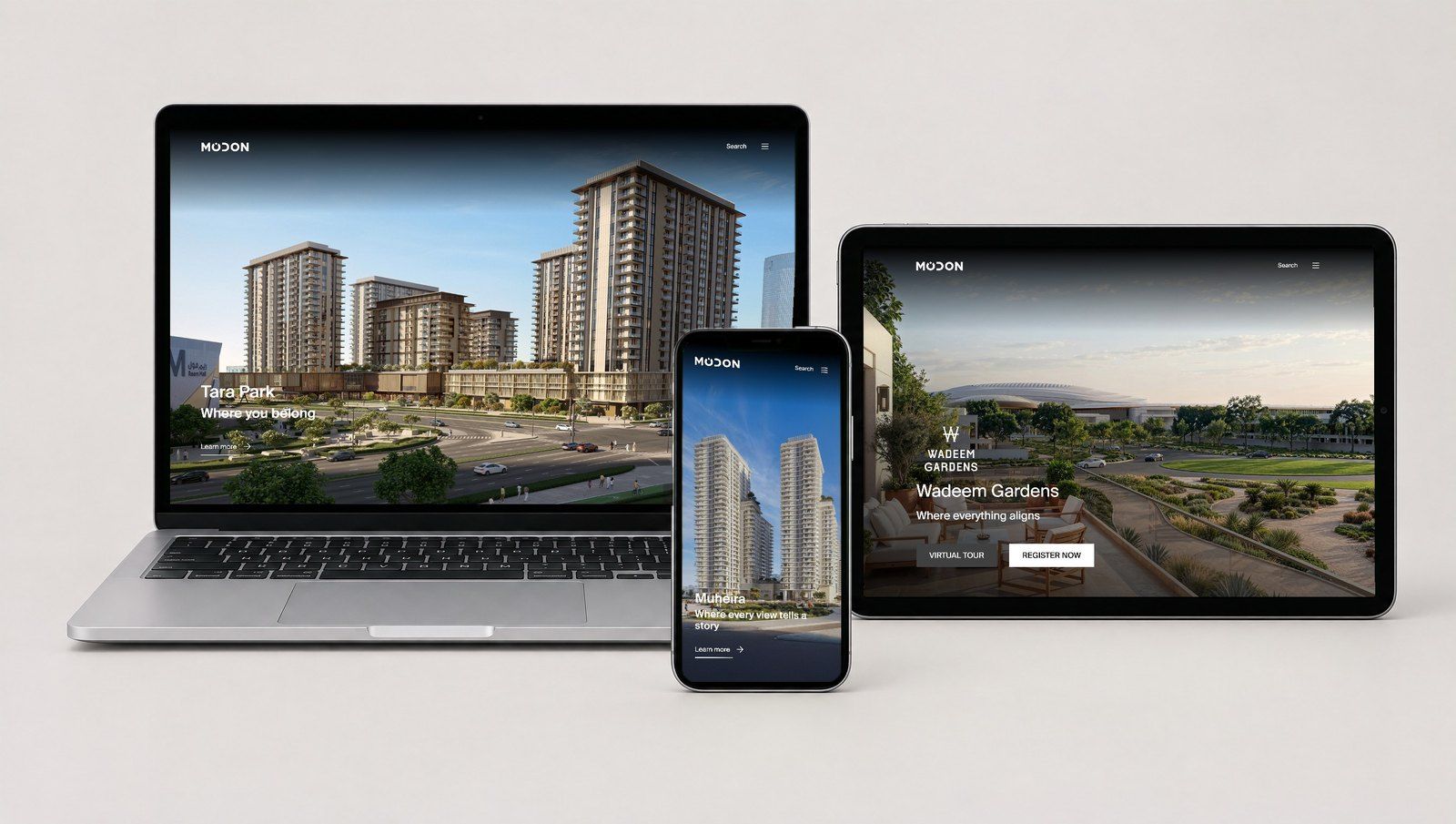
Look past the screenshots in a portfolio. Ask what the agency was actually responsible for: UX, development, copy, SEO, bilingual set-up or ongoing support. A good looking design tells you nothing about whether the CMS is easy to use or the site holds up on a phone. Our case studies set out what Codeeo handled on each project, including Modon Holding and EGO Sustainable.
Communication causes more website problems than code does. Unclear approvals, vague deliverables and confusion over who supplies the content are the usual culprits. Before signing, confirm how meetings run, who your main contact is, how revisions are handled and how issues are tracked.
Questions worth asking any shortlisted team:
- Have you worked with businesses in sectors like ours, in or around Business Bay?
- How do you approach mobile design and page speed?
- Can the site support Arabic and English?
- Which CMS or platform would you recommend for us, and why?
- How do you protect search rankings during a redesign?
- What do you need from our team before design starts?
- What happens after launch when we need updates or fixes?
- Will you train our team to manage everyday content?
- How will we measure whether the site is performing?
The answers show quickly whether a team thinks about outcomes or just sells pages. If you are at the stage of comparing firms, our guide to choosing the best website designing company in Dubai covers that decision in depth.
Content and brand decide how the site lands
Design is as much about what the site says as how it looks. Many projects stall because content was left until last. A site cannot show expertise when the service pages are thin, the images are stock and the calls to action are vague.
The visual identity should match your position in the market. A premium advisory firm needs a calm, assured style. A hospitality brand leans on atmosphere, photography and easy booking. A logistics company puts clarity and reliability first. A retail brand needs product stories, offers and a short path to purchase.
Good content also helps visitors qualify themselves. Instead of claims like "best solutions", each page should say who the service is for, what problem it solves, how the process works and what to do next. Your sales team benefits too, because prospects arrive with clearer expectations.
Maintenance keeps the site earning after launch
Launch is the start of the site's working life, not the end of the project. Websites need updates, security checks, backups, fresh content, speed checks and small design fixes. Search behaviour shifts, services change, teams grow and competitors improve their own sites, so a site left alone falls behind.
Maintenance matters most on sites with plugins, integrations, online stores, booking systems or two languages. A broken form or an out of date product page can quietly cost you enquiries. A slow mobile page erodes trust, and a missing redirect after a redesign can undo search rankings.
A sensible maintenance plan includes:
- Regular CMS, theme and plugin updates
- Security monitoring and backups
- Testing of forms and payments
- Speed and mobile checks
- Content updates for services, team pages, posts and offers
- SEO reviews and technical fixes
- Analytics reviews to find your most valuable pages and where people drop off
- New landing pages for campaigns
For most companies, this ongoing care is where the value of the original build is protected. The site stays accurate, secure and aligned with the business instead of drifting away from it.
Making the site relevant to Dubai buyers
Local relevance does not mean repeating place names on every page. It means making the site genuinely useful to the people you serve. If you work with clients in Business Bay, Downtown Dubai, DIFC, Jumeirah, Dubai Marina or across the UAE, say so where it is relevant to the reader.
Someone searching for business website design in Dubai, or website design in Business Bay, wants local understanding as well as technical skill. They are looking for a partner who knows the pace of the city, what clients here expect, how a bilingual market works and how competitive it is. Your content should show that without repeating itself.
Local trust comes from relevant service pages, sector examples, clear contact details, a map where it helps, enquiry and payment options that suit UAE customers and answers to the questions local buyers ask. If you serve international clients from Dubai, show that reach while keeping the local signals visible. Our local SEO team builds this into the site structure from the start.
A good website makes the decision easier
A strong business website removes doubt. Visitors should never have to guess what you do, whether you can help, how to reach you or why they should believe you. Every key page should move them one step closer to a decision, whether that is booking a consultation, asking for a proposal, calling your sales team, browsing products, downloading a brochure or visiting your office.
If you are planning a new site or a redesign, start with a tight brief. Write down the business goal, the audience, the pages you must have, the languages, who owns the content, the integrations, a budget range and a target launch window. Then choose a partner who can explain how each choice serves those goals, not just how the site will look.
How Codeeo can help
Codeeo is a web, app and software agency with a team of more than 80 people across Dubai, Riyadh and Karachi. We have delivered over 200 projects for clients in the UAE and the US, and we are rated 4.7 from 23 Google reviews. We handle the strategy, design, build, SEO and support behind a business website, so the same team that plans the site is the one that keeps it running. If you have a brief, or just a problem with your current site, talk to Codeeo and we will tell you plainly what we would do.
Frequently asked questions
Most people meet your business on a phone first.
They arrive from search, ads, referrals, QR codes, listings and social posts, so the site has to load fast, read well on a small screen and make calling, WhatsApp, enquiring, booking or buying easy. If the mobile experience is slow or clumsy, visitors lose confidence and move on to a competitor.
Web DevelopmentTop WordPress Web Development Services to ConsiderThe WordPress web development services worth paying for: custom builds, design, themes, plugins, WooCommerce, speed, security, SEO and migration, and how to choose a team. Web DevelopmentWebsite Designing Company in Dubai: Best OptionsHow to compare website designing companies in Dubai: ten agencies to review, what separates good from average, budgets, timelines, SEO and proposal checks.
 Web DevelopmentBest Website Designing Company in DubaiHow to choose a website designing company in Dubai: business goals, the right platform, SEO and conversion, costs and timelines, and support after launch.
Tell us what the business needs. We will tell you what to build first.
Schedule a free consultation and get a written recommendation, with costs, before you commit to anything.
Get in touchPROVEN RESULTS
4.7 / 5verified reviews on Google