
 MarketingVirtual Events and Immersive Experiences After the HypeVirtual events marketing after the metaverse hype: webinars and hybrid events that still produce leads, event lead capture steps and how to measure pipeline.
What Happened to Metaverse Marketing and What Replaced It
Metaverse marketing after the hype: what faded, what lasted such as AR try on and gaming platform partnerships, and how UAE brands can judge immersive ideas.

Metaverse marketing did not disappear; it shrank into the parts that proved useful. The idea of brands buying land and opening stores in persistent virtual worlds faded, while augmented reality try on, brand partnerships inside large gaming platforms and better 3D product content stayed. For a UAE brand, the practical question now is which of these immersive tools solves a real customer problem, not how to join a metaverse.
Why metaverse marketing peaked so quickly
The peak is easy to date. In October 2021, Facebook renamed its parent company Meta and said its focus would be to bring the metaverse to life. Marketing teams around the world, including many in Dubai, were asked what their metaverse plan was.
Several things worked against the early vision:
- Thin audiences. Many virtual worlds launched with a lot of press coverage and few daily users. A beautiful branded space that nobody visits is an expensive brochure.
- Hardware friction. Full virtual reality needs a headset, and most customers did not own one or did not wear it often.
- No clear path to sale. It was hard to connect a visit to a virtual showroom with an order, a booking or an enquiry.
- Speculation. Much of the activity was tied to digital land and collectibles whose value depended on hype rather than use.
None of this means immersive technology failed. It means the label promised more than the audience and hardware could deliver at the time.
What lasted: the immersive marketing that still works
AR marketing and virtual try on
Augmented reality works on the phone people already carry, which removes the hardware problem. Try on for eyewear, cosmetics, watches and trainers, and "view in your room" for furniture, answer a real question before purchase: will this suit me, and will it fit?
Snap, for example, announced AR shopping tools for brands in 2022, including templates for building catalogue based try on lenses and a kit for bringing try on into a retailer's own app. Product names and features change, so check the platform's current business documentation before planning a campaign around a specific tool.
Brand partnerships on gaming platforms
Gaming platforms already had the daily audience that standalone virtual worlds lacked. Instead of building a world, brands now pay to appear in, or partner with, games people already play. Roblox, for instance, said in May 2024 that its video ads were open to all advertisers through a self serve Ads Manager. Advertising standards on these platforms are strict, particularly around younger users, so confirm the current rules directly with the platform.
3D product content
The 3D models produced for virtual stores turned out to be useful elsewhere: rotating product viewers on ecommerce pages, AR previews and consistent imagery across marketplaces. For many retailers this is the most lasting benefit of the metaverse period.
Live and shoppable experiences
Livestream shopping, interactive video and creator collaborations deliver much of the engagement metaverse events promised, on platforms people use every day. Our guide to Instagram marketing in the UAE covers how these formats fit a regular content plan.
What faded and what to do with it
| Faded | What replaced it | What to do now |
|---|---|---|
| Virtual land and permanent branded worlds | Campaign based activations inside existing gaming platforms | Rent attention where the audience already is, for a defined period |
| Virtual reality showrooms | AR try on and 3D viewers on the phone | Add 3D or AR to the product pages with the most returns or questions |
| Collectible drops for hype | Loyalty programmes and member benefits | Reward real customers through your app, CRM or loyalty scheme |
| Metaverse events | Webinars, hybrid events and livestreams | See our guide to virtual and hybrid events after the hype |
How to judge an immersive idea before you fund it
Use four questions to separate useful immersive marketing from novelty.
- Does it answer a buying question? "How will this sofa look in my flat?" is a real question. "What does our logo look like in 3D?" is not.
- Is the audience already there? Prefer platforms and devices customers use every day over anything that needs a download or a headset.
- Can it connect to a sale or lead? Plan the next step, such as add to basket, book a visit or send a WhatsApp message, before building the experience.
- Can it be measured? Agree what success looks like, for example fewer returns, longer time on product pages or more enquiries, and make sure analytics can record it. If your tracking needs attention, our article on inbound marketing and lead quality explains how to tie activity to qualified enquiries.
Hypothetical example: an eyewear retailer with stores in Dubai and Abu Dhabi notices that frames bought online are returned more often than those bought in store. Instead of a virtual store, it adds AR try on to its best selling frames in its shopping app and tracks returns and conversion on those products against frames without try on. The test answers a business question in a few months.
Where immersive marketing fits in a UAE budget
For most businesses, immersive work is a test line in the budget, not a pillar. Search, social and the website still carry most of the demand. Our comparison of digital and traditional marketing budgets shows how to keep experimental channels in proportion.
Brands in retail, beauty, real estate, automotive and hospitality usually have the strongest case, because their products are visual and customers want to see them in context before committing.
Turn immersive ideas into working products
The parts of metaverse marketing that lasted are mostly product and website work: fast mobile pages, apps that customers keep, and analytics that show what changed. Codeeo builds mobile apps and ecommerce websites for UAE businesses and supports them with digital marketing and SEO. If you are weighing an immersive idea, speak to the Codeeo team in Dubai about whether your product pages and app are ready to support it.
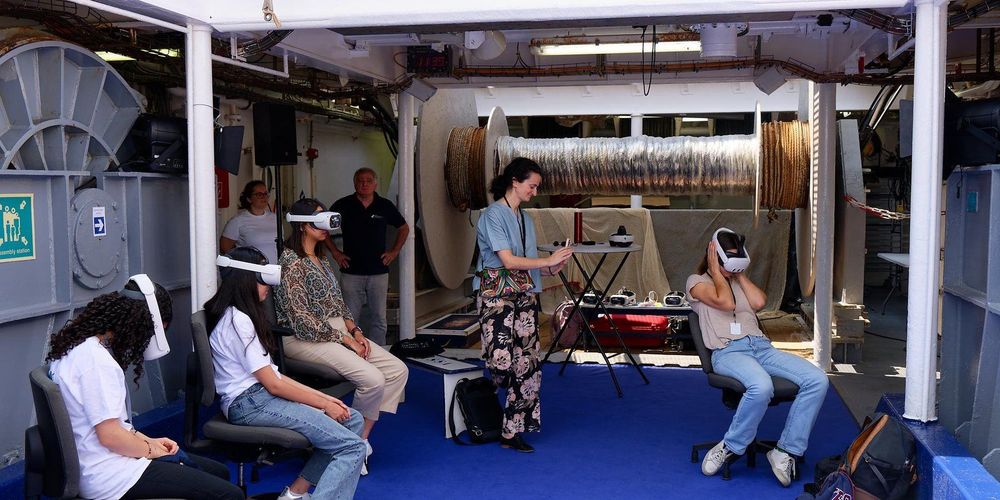
Cover photo: Virtual reality headset by FloppaIngénieur, licensed under CC BY 4.0, cropped.
Frequently asked questions
Rarely as a first step.
Building and maintaining a permanent world is costly, and visitors must keep coming back for it to pay off. A time limited activation or partnership inside a popular game, with a clear goal and an end date, is usually a safer test. Confirm platform advertising rules, especially for audiences that include children, before committing.
MarketingVirtual Events and Immersive Experiences After the HypeVirtual events marketing after the metaverse hype: webinars and hybrid events that still produce leads, event lead capture steps and how to measure pipeline. MarketingAudio and Spotify Ads: When Audio Belongs in the Media MixSpotify advertising for UAE brands: when audio suits your media mix, what drives Spotify ads cost, how to write audio creative and how to measure the real lift.
 MarketingChoosing a Domain Name for a Business Site or BlogHow to choose a domain name for a UAE business site or blog: naming tests, brand fit, .ae versus .com, newer extensions, and registering it safely in your name.
Tell us what the business needs. We will tell you what to build first.
Schedule a free consultation and get a written recommendation, with costs, before you commit to anything.
Get in touchPROVEN RESULTS
4.7 / 5verified reviews on Google