
 MarketingVirtual Events and Immersive Experiences After the HypeVirtual events marketing after the metaverse hype: webinars and hybrid events that still produce leads, event lead capture steps and how to measure pipeline.
A Digital Marketing Plan for UAE SMEs on a Fixed Budget
Digital marketing for SMEs in the UAE on a fixed budget: how to split spend by business type, a six month plan, and the numbers that show what is working.
Digital marketing for SMEs in the UAE works best when a fixed monthly budget is split by business type, not copied from a generic list of tactics. A clinic in Abu Dhabi, an online store shipping across the Emirates and a B2B consultancy in Dubai should spend very differently, and each needs a few months of steady work before the numbers mean anything. This plan shows how to divide a fixed budget, what to do month by month, and how to judge whether it is working.
Digital marketing for SMEs in the UAE starts with three numbers
Before deciding between Google, Instagram or SEO, write down three figures for your business. They shape every allocation decision that follows.
- The fixed monthly budget. Include everything: media spend, agency or freelancer fees, content production and tools. A budget that only covers ad spend quietly turns into a bigger one.
- The value of a customer. Average first order or contract value, plus how often customers return. A dental patient who comes back for years justifies a higher cost per enquiry than a one off purchase.
- Your close rate. Out of every ten enquiries, how many become paying customers? If you do not know, track it from the first month.
From these you can work out the most you can afford to pay for an enquiry and still make money. That ceiling is what tells you whether a channel is working, far more than clicks or followers.
The four building blocks of a small business marketing plan
Almost every SME plan in the UAE draws on the same four blocks. The difference between businesses is the weighting.
1. The website and tracking
Every channel sends people somewhere, and for most SMEs that is the website. A slow, unclear site with a hidden phone number wastes every other line of the budget. Fix the basics first: fast mobile pages, Arabic and English where your customers expect it, a visible WhatsApp or call button, a short enquiry form, and conversion tracking that records calls, forms and WhatsApp clicks. If your domain or site structure is still undecided, our guide to choosing a domain name covers that first step.
2. Search: local SEO and paid search
Search captures people who already want what you sell. Local SEO puts you in map results when someone nearby searches for your service. Google says local ranking is based mainly on relevance, distance and prominence, and that there is no way to pay for a better local ranking. Prominence draws on signals such as reviews and links, which is why a complete Google Business Profile and a steady flow of genuine reviews matter.
Paid search buys the same intent immediately. It is usually the fastest way to produce enquiries in month one, and the most expensive way to keep producing them if nothing else is built alongside.
3. Social media and paid social
Instagram, Facebook, TikTok, LinkedIn and Snapchat create demand rather than capturing it. They suit products people buy on impulse or by sight, and businesses where trust is built by showing the people and the work. What performs on Instagram in the UAE right now is covered in more detail in Instagram marketing for UAE brands.
4. Content, email and retention
Useful articles, guides, videos and email lists are slower but compound over time. For SMEs with repeat customers, an email or WhatsApp list of past buyers is often the cheapest source of revenue in the whole plan.
How to split the paid ads budget by business type
The allocations below are starting points expressed as shares of the total monthly budget. Adjust them after the first quarter using your own cost per enquiry, not anyone else's benchmarks.
| Business type | Largest share | Second share | Smaller share |
|---|---|---|---|
| Local service (clinic, salon, maintenance, legal) | Paid search and local SEO, about half together | Website and reviews, about a quarter | Social for trust and offers |
| Ecommerce store | Paid social and shopping ads, around half | Email, retargeting and retention, about a quarter | SEO for category and product pages |
| B2B services | Search ads and SEO content, around half | LinkedIn and email nurture, about a third | Website proof such as case studies |
| Restaurant, café or retail outlet | Local SEO, maps and reviews, around a third | Instagram and TikTok content plus ads, around a third | Delivery app and offer promotion |
Local service businesses
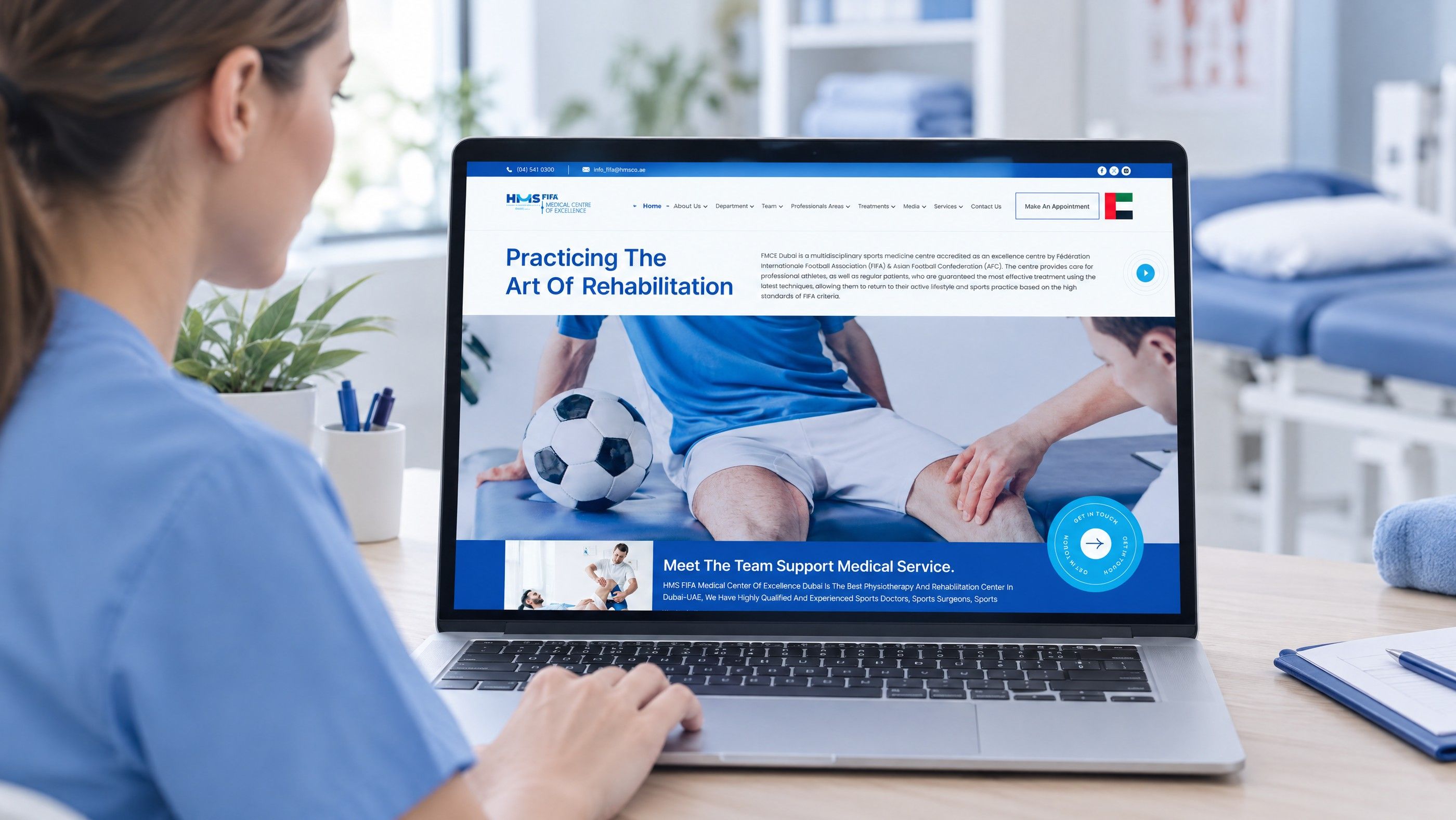
Customers search when they have a need: "physiotherapist near me", "AC repair Dubai Marina". Search is the backbone. Spend on the Google Business Profile, location pages and review requests, then run tightly targeted search ads on high intent terms in the areas you actually serve. Social media supports trust by showing the team, the premises and before and after work where regulations allow it. Healthcare businesses should check advertising rules with the Dubai Health Authority or the Department of Health Abu Dhabi before promoting treatments.
Ecommerce stores
Most ecommerce demand is discovered visually, so paid social and shopping campaigns take the largest share. The often forgotten line is retention: abandoned cart emails, post purchase flows and offers for past buyers. These cost little to run and make every paid acquisition worth more.
B2B services
Sales cycles are long, and buyers research before they call. Search ads on specific service terms, content that answers buyers' real questions, and LinkedIn for reaching named roles work together. Do not expect a lead in week one from a LinkedIn campaign; judge it on conversations started over a quarter.
Restaurants and retail outlets
Discovery happens on maps, Instagram, TikTok and delivery apps. Keep photos, menus and opening hours current everywhere, reply to reviews, and put paid spend behind content that already performs organically. For a view on when offline media still earns a place, see digital or traditional marketing for UAE budgets.
A month by month plan for the first six months
The order matters more than the exact amounts. Each phase depends on the one before it.
Month 1: foundations
- Audit the website for speed, mobile usability, clear calls to action and broken forms.
- Set up conversion tracking for calls, forms and WhatsApp clicks, and confirm it records test enquiries correctly.
- Complete or correct the Google Business Profile: categories, hours, photos, services, area served.
- Launch a small search campaign on your highest intent keywords to start producing data.
Month 2: first signals
- Review search terms and add negative keywords to stop paying for irrelevant clicks.
- Start a simple review request routine after each completed job or order.
- Publish the first two or three pieces of content answering the questions customers ask most.
- Test one paid social campaign with two or three creative ideas.
Month 3: first decisions
- Calculate cost per enquiry and cost per customer for each channel.
- Move budget away from channels well above your ceiling and towards those below it.
- Start retargeting site visitors who did not enquire.
Months 4 to 6: build what compounds
- Expand SEO to location and service pages that match how people search.
- Begin email or WhatsApp campaigns to past customers, respecting opt in and data protection rules.
- Refresh ad creative before performance fades, and test new offers rather than only new images.
- Review the plan quarterly against your three starting numbers.
Hypothetical example: A family run physiotherapy clinic in Al Barsha starts with most of its budget on search ads and a profile clean up. By month three it can see that searches for specific conditions convert better than broad "physio Dubai" terms, so it shifts spend to those and builds a page for each condition. By month six, map results and reviews bring a growing share of bookings, and the clinic can hold its budget steady while enquiries rise.
Keeping a fixed budget fixed
Platforms do not always spend in neat daily slices. Google Ads, for example, explains that a campaign may spend up to twice its average daily budget on a given day, while keeping the monthly charge within roughly 30.4 times the daily budget. Plan with the monthly total in mind, and check each platform's billing rules before setting limits.
Other practical controls:
- Set campaign level limits on every platform and a monthly check against the plan.
- Keep a small reserve for testing new ideas rather than raiding proven campaigns.
- Remember VAT on services and platform invoices when comparing quotes; the Federal Tax Authority publishes current guidance.
- Track fees and tools separately from media spend so you can see what the work really costs.
Choosing marketing channels you can actually sustain
Spreading a modest budget across six marketing channels usually means none of them gets enough spend or attention to learn anything. Two or three well run channels beat six neglected ones. Add a new channel only when the current ones are measured, stable and close to their limits. Audio and streaming ads, for instance, can work for some brands once the basics are in place, as explained in audio and Spotify ads in the media mix.
Turning the plan into results with Codeeo
Codeeo works with UAE businesses on the pieces this plan depends on: digital marketing and SEO, local SEO for map visibility, and website design and development so paid and organic traffic lands on pages that convert. With 200+ projects delivered across the UAE and the US and a team you can meet at the Dubai office, the team can help you set priorities for a fixed budget. A website audit is a sensible first step, or contact Codeeo to talk through your plan.
Cover photo: Brainstorming Customer Feedback (1) by Steveonmz, licensed under CC BY-SA 4.0, cropped.
Frequently asked questions
Paid search can produce enquiries within days of launch, but the first month is mostly about learning which keywords and messages work.
SEO and content usually take several months to build traffic, and depend on competition in your sector and area. Plan to judge the overall programme after a full quarter, with channel level checks every month.
MarketingVirtual Events and Immersive Experiences After the HypeVirtual events marketing after the metaverse hype: webinars and hybrid events that still produce leads, event lead capture steps and how to measure pipeline. MarketingWhat Happened to Metaverse Marketing and What Replaced ItMetaverse marketing after the hype: what faded, what lasted such as AR try on and gaming platform partnerships, and how UAE brands can judge immersive ideas.
 MarketingAudio and Spotify Ads: When Audio Belongs in the Media MixSpotify advertising for UAE brands: when audio suits your media mix, what drives Spotify ads cost, how to write audio creative and how to measure the real lift.
Tell us what the business needs. We will tell you what to build first.
Schedule a free consultation and get a written recommendation, with costs, before you commit to anything.
Get in touchPROVEN RESULTS
4.7 / 5verified reviews on Google