 SEORecovering Traffic After a Failed Website MigrationSEO recovery after migration in the right order: diagnose the traffic drop, fix redirects, rebuild internal links, request reindexing, then report progress.
What an Enterprise SEO Audit Should Deliver
What an enterprise SEO audit should deliver: crawl and log file analysis, indexing and template reviews, and a prioritised SEO roadmap with an owner per fix.

An enterprise SEO audit should deliver decisions, not just a list of problems. At minimum you should receive crawl analysis, log file analysis, a review of indexing and templates, and a prioritised SEO roadmap in which every fix has an owner, an effort estimate and a way to confirm it worked. If the output is a long export of warnings from a crawling tool, you have bought data rather than an audit.
This guide sets out the SEO audit deliverables a large organisation should expect, how to tell a useful audit from a superficial one, and what to agree before the work starts. It is written for buyers, not for teams running their own checklist.
What an enterprise SEO audit is for
On a site with thousands or hundreds of thousands of URLs, most search problems are systemic. A single template, rule or plugin setting repeats a fault across an entire section. The purpose of an audit is to find those systemic causes, estimate their impact, and translate them into work your teams can schedule.
That makes the audience wider than the SEO team. Developers need precise specifications, product owners need priorities they can defend, and leadership needs a short explanation of risk and opportunity. A good audit has a section for each.
Core enterprise SEO audit deliverables
1. Executive summary
Two or three pages in plain language: the main findings, the likely business impact, the top priorities and what they require from internal teams. Someone who reads nothing else should understand what needs to happen next and why.
2. Crawl analysis
Crawl analysis maps how the site is actually structured: which URLs exist, how they link to each other, their status codes, canonicals, directives and depth from the homepage. On a large site the crawl should be segmented by section and template, so a fault can be traced to its source. Expect the audit to explain how JavaScript rendered content was handled and whether the crawl was configured to match how search engines see the site.
3. Log file analysis
Server logs record what search engine crawlers actually requested, not what a tool predicts they will request. Log file analysis shows where crawling is concentrated, which important sections are rarely visited, and how much activity is spent on parameters, redirects or error pages. Because some bots pretend to be Googlebot, the audit should explain how requests were verified; Google documents how to verify its crawlers.
Logs work best alongside Search Console's Crawl Stats report, which shows Google's requests, response codes, file types and crawler types for root level properties. Comparing the two helps separate site problems from tool assumptions.
4. Indexing and crawl budget review
This section compares what you want indexed with what is indexed. It should cover duplicate and near duplicate URLs, faceted navigation, soft 404 errors, redirect chains and pages excluded from the index. Google's guide to crawl budget is aimed at very large or fast changing sites and names several of these as issues that waste crawling, so the audit should state whether your site falls into that group and why.
5. Template and rendering review
Each major template, such as product, category, article, location or search results, should be reviewed for titles, headings, structured data, internal links, rendering and page experience. Fixing one template fixes every page built on it, so this is often where the most valuable recommendations sit.
6. Performance and page experience
Expect a review of Core Web Vitals using field data where it exists, broken down by template and device. The findings should name likely causes, such as unoptimised images or heavy scripts, rather than simply repeating scores.
7. International and language setup
For organisations publishing in English and Arabic, or serving several countries, the audit should check how localised versions are signalled to search engines, whether hreflang annotations are complete and reciprocal, and whether each version is genuinely localised rather than duplicated.
8. Content and search demand
A content review compares the pages you have with what your audience searches for. It should identify thin or overlapping pages, gaps in important topics, and pages competing for the same queries. On a large site this is usually sampled by section rather than read page by page.
The SEO roadmap: where the value sits
The SEO roadmap is the deliverable that determines whether the audit changes anything. Every recommendation should appear as a row with the same fields, so it can be moved straight into a backlog.
| Field | What it should contain |
|---|---|
| Issue | A short description and the affected templates or sections |
| Evidence | Example URLs, crawl or log data, and screenshots where helpful |
| Impact | Why it matters, rated against a stated scale |
| Effort | A rough estimate agreed with or reviewed by developers |
| Owner | The team responsible: development, content, product, brand or legal |
| Acceptance criteria | What done looks like and how to test it on staging and production |
| Measure | How success will be checked after release |
Prioritisation should combine impact and effort. High impact, low effort items go first; high impact, high effort items need a business case and a slot in the release plan. Items with low impact should be listed but not allowed to crowd the backlog.
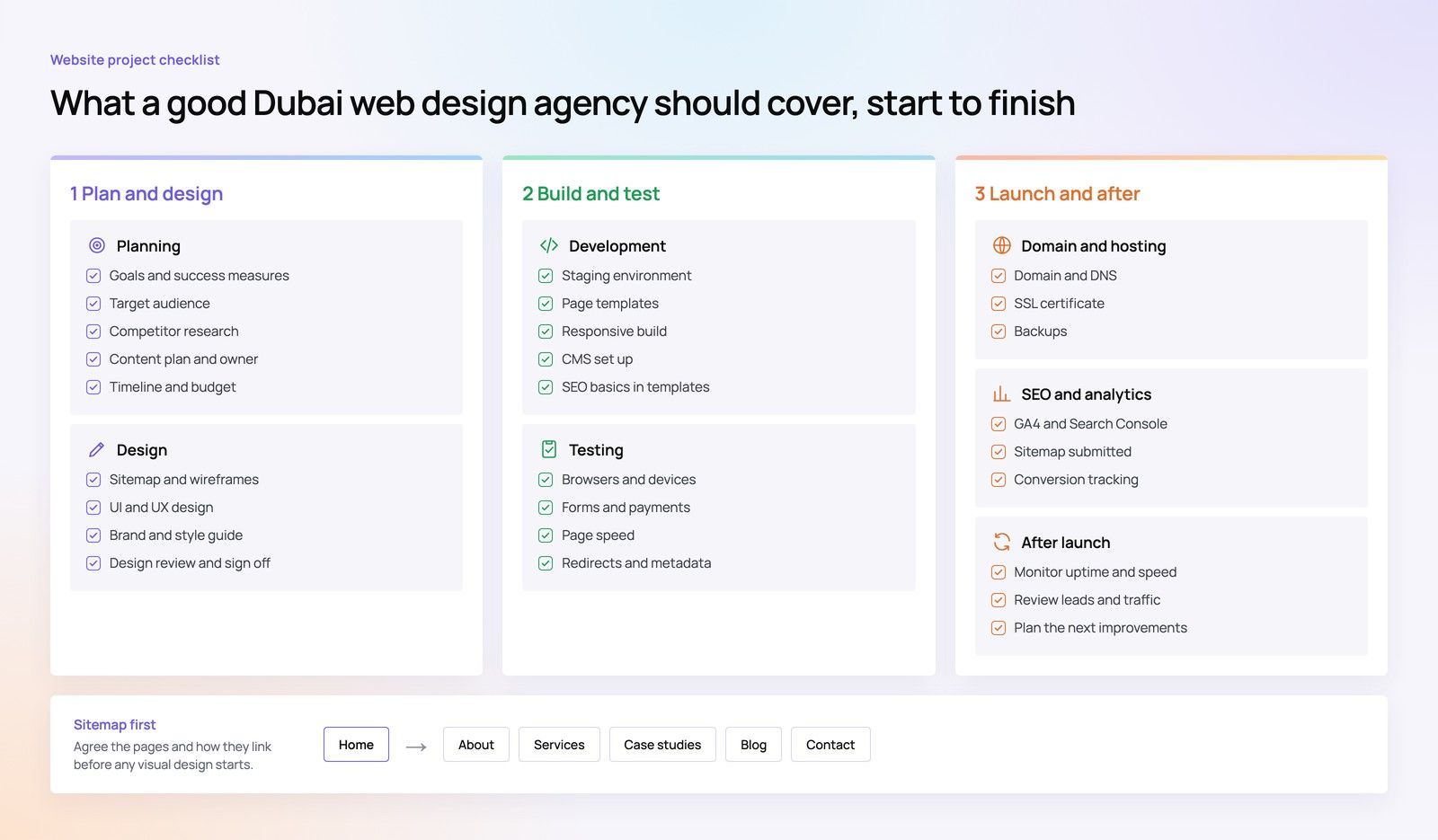
Hypothetical example: an audit for a Dubai property portal finds that filtered listing pages generate a very large number of crawlable URL combinations. Instead of stating "reduce duplicate URLs", the roadmap row names the listing template, shows log evidence that crawlers spend heavily on these combinations, assigns the fix to the platform team, defines which filters should remain indexable, and sets a log based check one month after release.
How to judge the quality of an audit
Use these questions when an audit is delivered, or when comparing proposals before you buy one.
- Is it specific to your site? Generic advice that could apply to any website signals a template report.
- Are findings tied to causes? "Many pages have missing titles" is a symptom; "the product template drops the title when a field is empty" is a cause.
- Is the evidence reproducible? Your team should be able to check every finding with the URLs and data provided.
- Do priorities reflect your business? Revenue or enquiry pages should outrank minor sections.
- Can developers build from it? Ask a developer to read a sample of tickets before you accept the audit.
- Does it avoid guarantees? Google's advice on hiring an SEO says an audit should give realistic estimates of improvement and the work involved, and warns that no one can guarantee a top ranking.
What to agree before the audit starts
Access
Provide read access to Search Console and analytics, a sample or extract of server logs, and access to staging if possible. Google suggests granting only read access to Search Console during an audit. Agree how log data will be transferred and stored, particularly if it contains IP addresses or other personal data, and check the arrangement with your data protection lead.
Scope
List the domains, subdomains, markets and languages in scope, and say which sections matter most commercially. If a migration or redesign is planned, tell the auditor; a pre launch migration audit has different goals from a general health check.
Format and handover
Agree that the roadmap will be delivered as a spreadsheet or importable backlog, not only a slide deck, and that a walkthrough session with developers and product owners is included. Write these into the agreement; our guide to SEO contracts, scope and SLAs covers how.
What happens after the audit
An audit is a starting point. The next step is usually an implementation phase in which tickets are refined, built and checked, followed by measurement against the baseline the audit established. Many organisations then move to an ongoing programme sized to the backlog. Our article on enterprise SEO pricing drivers explains how the audit's findings shape that budget, and agency or freelancer for a large site helps decide who should carry the work forward.
Commission an audit your teams can act on
Codeeo offers a technical SEO review and a broader website audit, with follow on support through digital marketing and SEO, Core Web Vitals work and site migration services. Because Codeeo also designs and develops websites, recommendations can be written for, and where you choose, built by developers who understand the platform.
With 200+ projects delivered across the UAE and the US and an office in Dubai, Codeeo can walk your team through findings in person. Contact Codeeo to scope an audit around your site, your markets and your release process.
Frequently asked questions
A standard technical audit usually crawls the site and lists issues.
An enterprise audit adds log analysis, segmentation by template and section, review of rendering and international setup, and a roadmap with owners, effort and acceptance criteria. It is designed to feed a development backlog and a governance process, which smaller audits rarely need to do.
SEORecovering Traffic After a Failed Website MigrationSEO recovery after migration in the right order: diagnose the traffic drop, fix redirects, rebuild internal links, request reindexing, then report progress. SEOPlanning an Enterprise Rebuild That Keeps SEO, UX and GovernancePlan an enterprise website rebuild that protects rankings, user tasks and content governance, with one shared inventory, phase gates and agreed launch criteria.
 SEOProtecting Lead Flow During a Redesign, Not Only RankingsAvoid a website redesign conversion drop: map lead paths, rebuild form tracking, protect ad landing pages and test CRM integration before and after launch day.
Tell us what the business needs. We will tell you what to build first.
Schedule a free consultation and get a written recommendation, with costs, before you commit to anything.
Get in touchPROVEN RESULTS
4.7 / 5verified reviews on Google