 Web DevelopmentWordPress VIP or Self Hosted Enterprise WordPress in the UAEWordPress VIP or self hosted enterprise WordPress in the UAE: compare data residency, hosting SLA, cost drivers and code review rules, plus key setup notes.
B2B or B2C Website? How Buyer Type Changes Every Design Choice
B2B vs B2C website design compared: navigation, content depth, proof, pricing display and conversion points, with notes on the long Gulf B2B buying cycle.
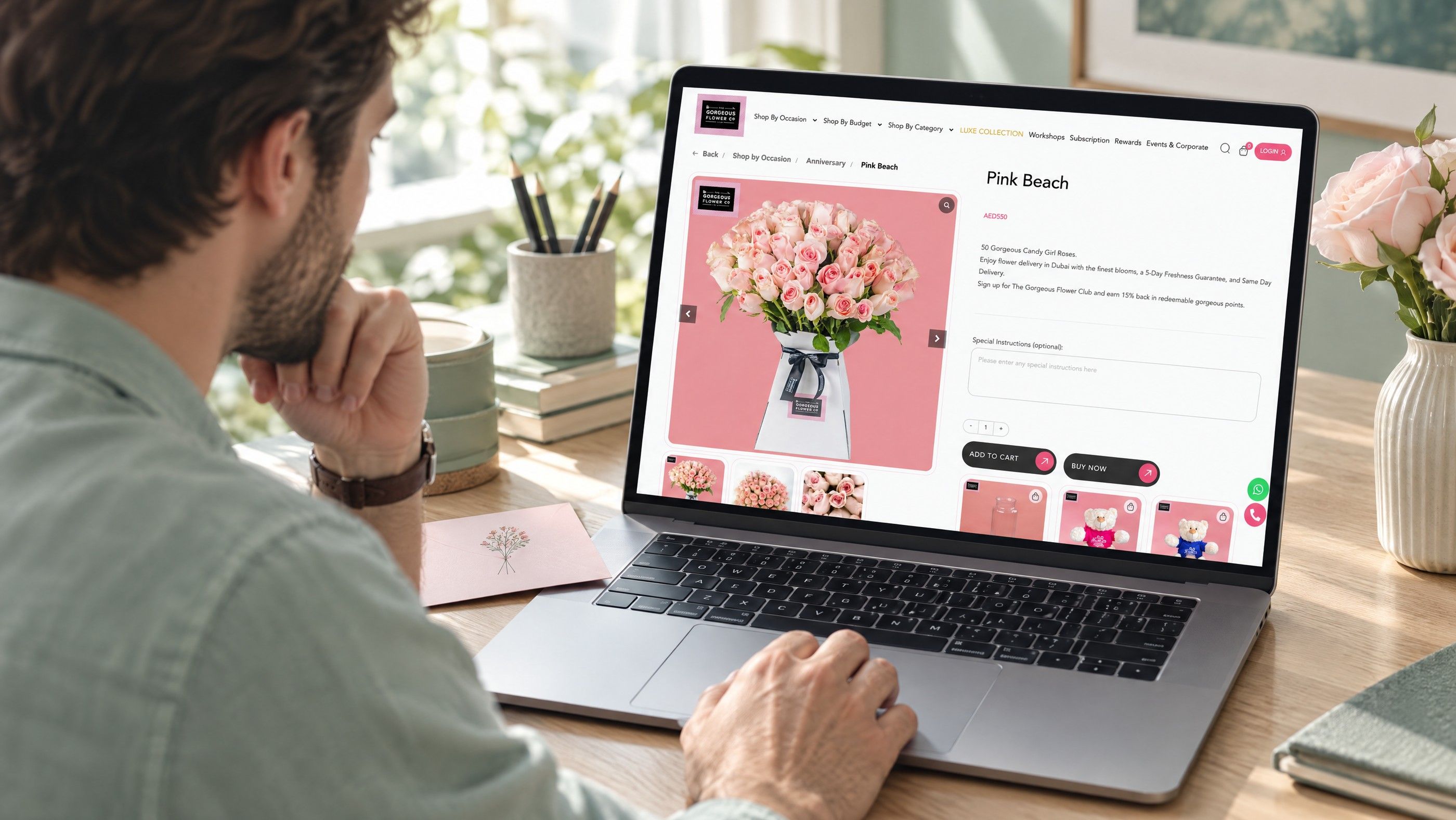
The b2b vs b2c website design question comes down to who makes the decision and how long it takes. A B2C site usually serves one person buying for themselves in a single visit or a few, so it should remove friction and make purchase easy. A B2B site serves a group of people evaluating a supplier over weeks or months, so it must answer different questions for each of them and keep the conversation going until a deal is signed.
Almost every design choice follows from that difference: navigation, content depth, proof, how prices are shown and where the conversion points sit. This guide compares them side by side, with notes on how buying works in the Gulf.
Start with the buyer, not the template
Many businesses pick a theme or copy a competitor's layout and only later discover it was built for a different kind of buyer. A theme designed for fashion retail will push product grids and a basket icon. A theme designed for a consultancy will push long service pages and a contact form. Neither is wrong; each suits one buyer type.
Before any design work, write down answers to four questions:
- Who uses the site, and who signs off the purchase? Are they the same person?
- How many visits does a typical buyer make before acting?
- What is the first commercial action on the site: buy now, book, request a quote or speak to sales?
- What happens after that action, and which system does the record go into?
The answers place you on a spectrum. Pure B2C and pure B2B are the ends; many UAE businesses sit somewhere between, for example a supplier that sells online to consumers and also supplies hotels and contractors on account.
B2B vs B2C website design at a glance
| Design element | B2C website design | B2B website design |
|---|---|---|
| Main goal | Complete a purchase or booking in the session | Start and support a sales conversation |
| Decision maker | Usually one person | A buying committee with different concerns |
| Navigation | Product categories, search, filters | Solutions, industries, roles, resources |
| Content depth | Short, scannable, visual | Detailed specifications, process and technical answers |
| Proof | Reviews, ratings, returns policy | Case studies, client sectors, compliance and process detail |
| Pricing | Visible on every product | Often by quote, sometimes ranges or tiers |
| Conversion point | Add to basket, checkout, booking | Enquiry, demo, document download, meeting request |
| After conversion | Order confirmation and fulfilment | CRM record, sales follow up, nurturing |
Navigation: categories versus problems
How B2C navigation works
Consumers browse by what something is. They expect categories such as "Women", "Electronics" or "Treatments", a prominent search bar and filters for size, price range, colour or brand. The menu should get them to a product list in one or two taps. On mobile, which carries much of consumer traffic, a sticky basket and a search icon at the top matter more than a long menu.
How B2B navigation works
Business buyers often arrive with a problem rather than a product name. A procurement manager at a contractor might look for "site safety signage" while an engineer on the same team looks for a material standard. Good B2B website design offers several routes into the same content:
- By solution or service, for buyers who know what they need.
- By industry, for buyers who want to see that you understand their sector.
- By role, where finance, technical and operational readers need different answers.
- Resources, such as specification sheets, guides and documentation.
The risk is a menu that grows to dozens of items. Keep the top level short and let the sub pages do the sorting.
Content depth: speed versus thoroughness
B2C copy needs to be short and confident. A product page should lead with the image, the name, the price and the key benefit, then offer detail lower down for the people who want it. Long blocks of text near the buy button slow decisions.
B2B content has the opposite job. Every member of a buying committee is looking for a reason to say no, and the website should answer their objections before they are raised. In the Gulf, where larger B2B purchases often involve procurement teams, technical reviewers, finance and senior sign off, a single deal can pass through many hands. Each reader needs something different:
| Reader | What they look for | Content that helps |
|---|---|---|
| Technical or IT lead | Fit with existing systems, security, standards | Specifications, integration notes, documentation |
| Finance | Commercial model and risk | How pricing works, payment terms, contract structure |
| Procurement | Supplier credibility and compliance | Company details, licences, policies, references on request |
| Operational user | Whether it will make their work easier | Process walkthroughs, screenshots, onboarding detail |
| Senior sponsor | Outcome and confidence in the supplier | Short summary pages, case studies, leadership information |
Make this content easy to share. B2B pages are often forwarded by email or messaging app to colleagues who never saw the homepage, so each page should make sense on its own.
Proof: reviews versus evidence
Consumers trust other consumers. Star ratings, review counts, user photos and a clear returns or exchange policy close the gap between interest and purchase. Place them near the price and the buy button, not on a separate page.
Business buyers need evidence that you have solved a similar problem for an organisation like theirs. Useful proof on a B2B site includes:
- Case studies that explain the problem, the approach and what was delivered, without inflating results.
- Sector pages that show you understand the buyer's regulations and constraints.
- Process pages that show what happens after signing and who they will work with.
- Team and office information, which matters in the UAE where many buyers prefer to meet a supplier face to face before committing.
Only publish proof you can back up. Unverifiable claims are easy for a careful buyer to spot and can undo the rest of the page.
Pricing display: what to show and why
B2C: show the full price clearly
Consumers expect a price on every product, with delivery charges visible before checkout. In the UAE there is also a legal angle: the VAT Law and its Executive Regulation generally require prices for taxable supplies to be displayed inclusive of VAT. A summary of the rule and its exceptions is set out in this analysis of the VAT inclusive display rule. Confirm the details for your business with a tax adviser or the Federal Tax Authority.
B2B: be as open as your model allows
Many B2B prices depend on volume, scope or configuration, so a fixed price list is not always possible. Hiding pricing entirely, though, forces every buyer to contact sales just to find out whether you are in range, and some will simply leave. Options that work:
- Explain what drives the price, such as volume, scope, integrations or support level.
- Show packages or tiers with what each includes, even if the figure is "on request".
- Offer a quote form that asks only for the information needed to price.
- For trade accounts, show prices after login so approved buyers see their own terms.
The same Executive Regulation allows prices for supplies to VAT registered businesses to be shown exclusive of VAT if that is clearly stated, which is relevant for trade portals. Again, check the specifics with a qualified adviser.
Conversion points: one action versus many
B2C conversion design
On an ecommerce website, the conversion path should be short and predictable: product, basket, checkout, confirmation. Guest checkout, familiar payment methods, clear delivery information and a visible WhatsApp or chat option for questions all reduce drop off. Every extra field or page is a reason to stop.
B2B conversion design
A lead generation website needs several conversion points, because buyers at different stages want different things:
- Early stage: a guide, checklist or specification download, sometimes gated behind an email address.
- Middle stage: a webinar, demo video or product walkthrough.
- Late stage: a quote request, consultation booking or call with sales.
Each form should feed your CRM with the source page and the action taken, so sales knows what the buyer has already seen. Without that link, the website generates names but not context.
When a business needs both
Plenty of UAE companies sell to both consumers and businesses. A coffee roaster may sell bags online and supply cafés on account; a furniture brand may run a showroom shop and a contract division for hotels and offices. There are three common ways to handle this:
| Approach | Works well when | Watch out for |
|---|---|---|
| One site with separate sections | The brand is the same and audiences overlap | A homepage that tries to speak to everyone and convinces no one |
| One site with a trade login | Business buyers need their own prices, ordering and invoices | Account approval and ERP or CRM integration add build work |
| Separate sites | The offers, sales process and teams are genuinely different | Duplicate content, split SEO effort and two sites to maintain |
Hypothetical example: a Sharjah based office supplies company sells to consumers online and to schools and offices on credit. A practical structure is one site with a consumer shop at the front, a clearly labelled "For business" section explaining account benefits, and a trade login where approved customers see contract prices and reorder from their order history. The consumer side is measured on sales; the business side is measured on account applications and repeat orders.
Measuring success differently
Because the goals differ, so do the numbers worth watching. A B2C team tracks conversion rate, average order value, basket abandonment and repeat purchase. A B2B team tracks qualified enquiries, the pages viewed before an enquiry, how many leads become opportunities, and the time from first visit to signed deal. Agree these measures before design starts, so the site is built to report on them.
For a sense of how project type affects the budget, see website cost in the UAE by project type and design versus build costs in Dubai. If you want to understand what a professional redesign changes in practice, read what professional web design changes for a UAE business, and for projects in the capital, how an Abu Dhabi project differs.
Plan the right site for your buyers
Codeeo designs and builds both kinds of site. Our website design and development team plans structure, content and conversion points around how your buyers decide. For consumer selling, our ecommerce development covers Shopify, WooCommerce and headless builds. For B2B, we can connect enquiry forms and trade portals to Microsoft Dynamics 365 and CRM so sales sees the full picture. We have delivered 200+ projects across the UAE and the US, and our Dubai office means you can meet the team in person. Tell us about your buyers and your goals.
Frequently asked questions
Only if buyers already order standard items in repeatable quantities.
Distributors, wholesalers and parts suppliers often benefit from a trade portal with saved lists, quick reorder and invoice payment. For services or configured products, a cart adds little; a well designed quote request does the job better. Many B2B sites combine both, offering online ordering for catalogue items and a quote route for custom work.
Web DevelopmentWordPress VIP or Self Hosted Enterprise WordPress in the UAEWordPress VIP or self hosted enterprise WordPress in the UAE: compare data residency, hosting SLA, cost drivers and code review rules, plus key setup notes. Web DevelopmentWhat a WordPress Maintenance SLA Should CoverWhat WordPress maintenance services should cover in writing: core and plugin updates, security, backups, multilingual publishing support and response times.
 Web DevelopmentWordPress Release Management: Staging, QA and RollbackA WordPress deployment workflow that releases safely: Git based builds, a staging site that mirrors live, smoke tests to run and a rollback plan written first.
Tell us what the business needs. We will tell you what to build first.
Schedule a free consultation and get a written recommendation, with costs, before you commit to anything.
Get in touchPROVEN RESULTS
4.7 / 5verified reviews on Google