 Web DevelopmentWordPress VIP or Self Hosted Enterprise WordPress in the UAEWordPress VIP or self hosted enterprise WordPress in the UAE: compare data residency, hosting SLA, cost drivers and code review rules, plus key setup notes.
Clinic and Hospital Websites: Booking, Doctors and Patient Trust
Medical website design in Dubai: booking flows, doctor profiles that match licences, patient review rules and the healthcare advertising standards clinics meet.
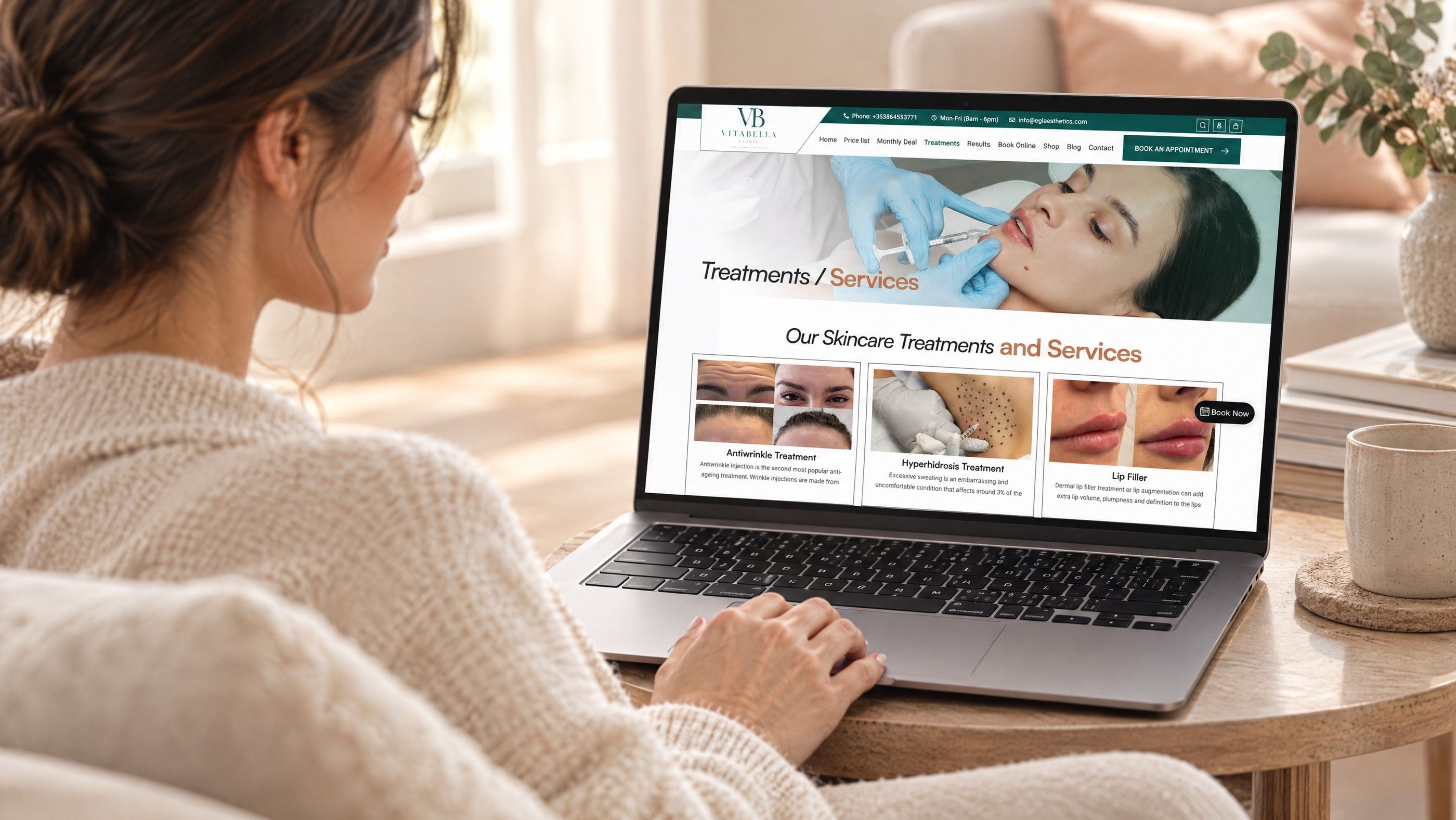
The medical website design Dubai patients respond to comes down to three things: a booking flow that gets the right patient to the right doctor quickly, doctor profiles that are accurate and match each practitioner's licence, and content that respects the UAE's healthcare advertising rules. Clinics that design around those three tend to win more appointments and fewer warnings from the regulator.
This guide is for clinic owners, hospital marketing teams and practice managers planning a new site or replacing one that no longer works. It skips general design advice and focuses on what is specific to healthcare.
Start with how patients actually book
Patients arrive with very different starting points. Some know the doctor they want. Some know the specialty. Many only know their insurer and the area they live in. A clinic website design that forces everyone through one route loses the rest.
Three entry points every booking flow should support
- By doctor. Returning patients and referrals search a name. The doctor profile should carry its own booking button with that doctor preselected.
- By specialty or service. New patients browse dermatology, physiotherapy or paediatrics. Show the doctors in that specialty, their languages and next available slots.
- By location and insurance. Multi branch groups should let people filter by branch and accepted insurance network before choosing a time.
Avoid booking routes that ask patients to choose a condition from a symptom list and then imply a diagnosis. Healthcare advertising guidance in the UAE warns against content that may lead to inappropriate self diagnosis or self treatment, and a symptom checker built for marketing can drift into exactly that.
Online appointment booking: what to connect behind the scenes
An online appointment booking button that only sends an email to reception is a contact form with a better label. Real booking needs a live connection to the schedule.
| Approach | Works well for | Watch out for |
|---|---|---|
| Request form, confirmed by phone | Single doctor practices with simple schedules | Slow replies lose patients to clinics with instant booking |
| Third party booking widget | Small clinics wanting quick setup | Branding limits, data stored by another company, double booking if not synced |
| Integration with your clinic management or hospital information system | Multi doctor clinics and hospitals | Needs API access from the system vendor and careful testing |
| Custom booking layer over several systems | Groups with different systems per branch | Higher build scope; worth it only where volume justifies it |
Whichever route you take, plan for confirmation messages, reminders, cancellation and rescheduling, and a clear fallback to phone or WhatsApp when a slot is not available online. Many UAE patients will message before they book, so treat messaging as part of the flow, not an extra.
Doctor profiles that build trust and stay compliant
Doctor profiles are often the most visited pages on a clinic site after the homepage. They are also where many compliance problems start, because marketing copy creeps into professional titles.
What a strong doctor profile includes
- Full name and the title exactly as it appears on the practitioner's licence.
- Specialty, qualifications and the institutions they trained at.
- Languages spoken and gender, which matter to many patients in the UAE.
- Clinic days, branches and a booking button linked to their own calendar.
- A real, unedited photograph and a short plain language introduction.
- Publications or teaching roles where relevant and verifiable.
The DHA Standards for Medical Advertisement Content on Social Media are a useful reference here, even though they are written for social channels. They say practitioners should not use titles different from their DHA licence, such as "aesthetic consultant" or "anti ageing specialist", and that the "Dr" prefix is limited to physicians, dentists and recognised PhD holders. The same standards list items that are acceptable to advertise, including languages spoken, gender, office hours, qualifications and accreditations, which maps neatly onto a profile template.
Structure profiles as data, not pages
Build doctor profiles as structured records in the CMS with fields for licence title, specialty, languages, branches and booking calendar. That lets the site generate specialty listings and branch pages automatically, keeps titles consistent, and lets the medical director review one field when a licence changes rather than hunting through page copy.
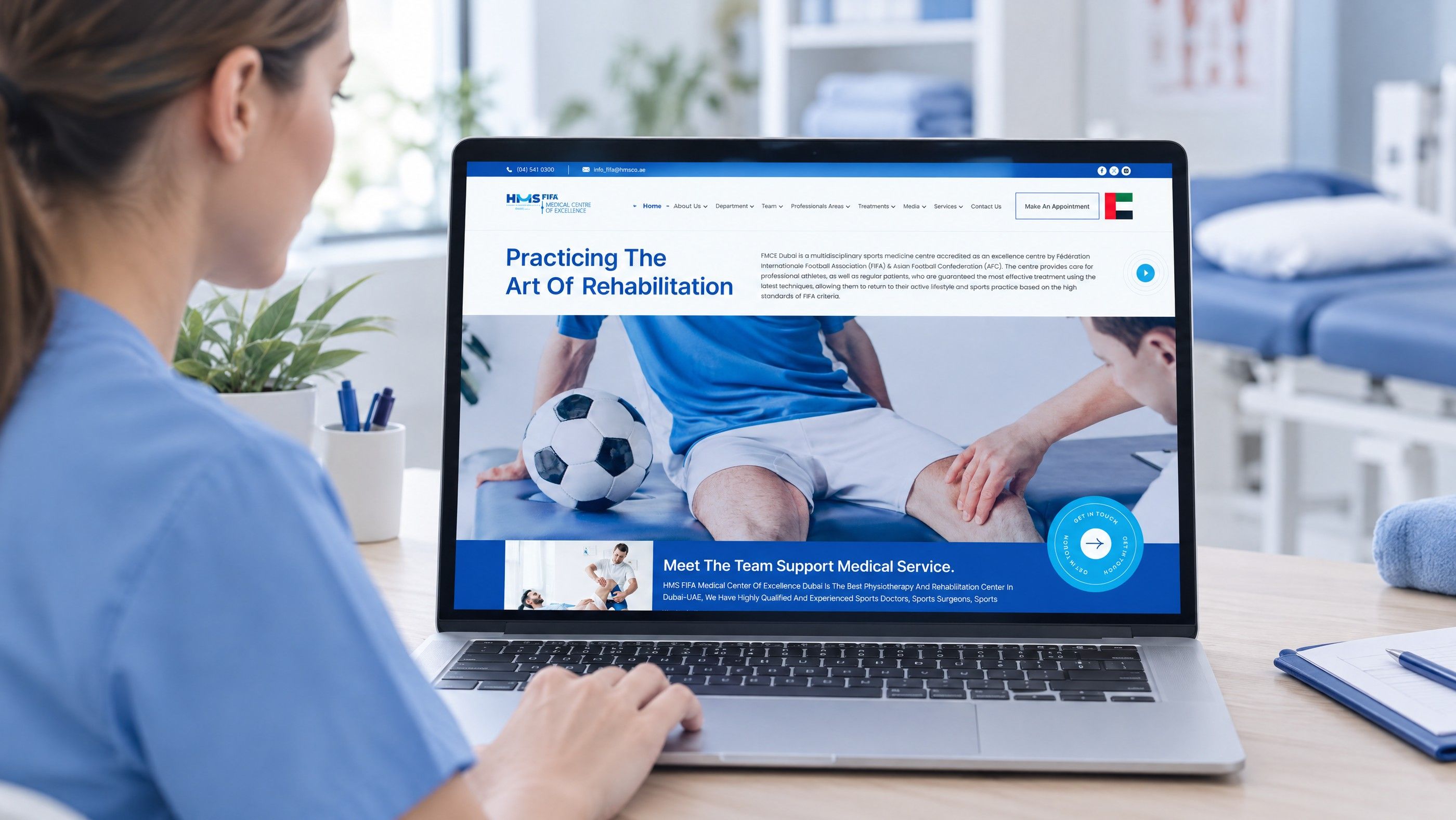
Advertising rules that shape medical website design Dubai clinics can publish
A clinic website is promotional content, and UAE health regulators treat it that way. The Ministry of Health and Prevention lists a licence for healthcare advertisements on a website or digital link, Dubai facilities work under DHA standards, and the Department of Health in Abu Dhabi runs its own health media and advertising guidelines. Which approvals apply depends on who licenses your facility, so confirm the current requirements with your licensing authority before launch.
Content rules worth building into templates
The DHA standards set out several principles that translate directly into website content and design decisions:
- No absolute or exaggerated claims. Words such as "the best", "unique", "safest", "guaranteed" or "immediate results" are listed as unacceptable.
- Outcomes must be substantiated and risks stated. Treatment pages should explain likely outcomes honestly and include associated risks.
- Before and after images need rules. They should show the same person with the same lens and no editing, with a disclaimer that results vary, written in the same font size as the rest of the content.
- Written consent for any patient image or statement. Consent should be documented and limited to the purpose and period agreed.
- Price information must be accurate. Offers with conditions must state them, and time limited inducements that cannot be met are not acceptable.
- No fear based messaging. Content should not suggest that a person's health will suffer if they do not book.
Designers can help here. A before and after component with a mandatory disclaimer field, a treatment page template with a required "risks" section, and a CMS approval step for the medical director all make compliance the default rather than an afterthought.
Patient reviews and testimonials
Patient reviews are powerful, and they are regulated. The DHA standards list patient testimonials without written consent as prohibited content. In practice, link to your public Google or platform reviews rather than copying them onto treatment pages, and only feature a named patient story when written consent is on file and the medical director has approved the wording.
Privacy and health data on clinic websites
Booking forms collect personal and often health related information. The UAE's data protection framework includes Federal Decree Law No. 45 of 2021, and the use of technology in health fields is separately governed by Federal Law No. 2 of 2019. Facilities in economic zones or financial centres may sit under different regimes.
For the website, that means collecting only what the booking needs, keeping clinical questions out of public forms where possible, using encrypted connections and secure hosting, and making sure analytics and advertising tags do not capture form contents. Agree data storage location and retention with your compliance lead and counsel before choosing booking tools.
Local search, languages and mobile
Most clinic searches are local and made on a phone. A few practical points matter more than visual polish:
- A page per branch with address, map, parking notes, hours and the doctors who practise there.
- Consistent clinic name, address and phone across the website and Google Business Profile.
- Arabic and English versions designed together, with right to left layouts tested on real devices.
- Tap to call and messaging buttons that stay visible on small screens.
- Fast pages, since patients comparing clinics rarely wait for a slow site.
A planning checklist for clinics and hospitals
- List every booking entry point and decide which system holds the schedule.
- Collect licence titles, qualifications and languages for each practitioner.
- Confirm which advertising approvals apply to your facility and website.
- Write treatment pages with outcomes, risks and conditions stated plainly.
- Set up medical director approval in the CMS for clinical content.
- Map data collected in forms and agree storage and retention.
- Plan branch pages and local search profiles together.
For the commercial side, our article on what drives website design cost in Dubai explains how booking integrations and bilingual builds affect scope, and how Abu Dhabi web projects differ is useful for DoH licensed facilities. Regulated sectors share many of the same patterns, as our guides to finance website design and school and university websites show.
Building a clinic website with Codeeo
Codeeo's Dubai team designs and builds websites and booking systems for healthcare providers, so clinic owners can meet the people working on their project in person. Typical work covers UI/UX design for booking and doctor pages, website development on a CMS with approval workflows, custom software where booking must connect to clinic systems, and local SEO for branch visibility. See more on our healthcare work, then get in touch to talk through your booking flow and practitioner list. Regulatory approvals remain with your facility and its licensing authority.
Frequently asked questions
It can.
MOHAP lists a licence for healthcare advertisements on websites, and emirate regulators such as DHA and DoH have their own advertising rules and processes. Which ones apply depends on who licenses your facility and what the site promotes. Ask your licensing authority or a healthcare regulatory adviser early, because approval timing can affect your launch date and any campaign that points traffic to the new site.
Web DevelopmentWordPress VIP or Self Hosted Enterprise WordPress in the UAEWordPress VIP or self hosted enterprise WordPress in the UAE: compare data residency, hosting SLA, cost drivers and code review rules, plus key setup notes. Web DevelopmentWhat a WordPress Maintenance SLA Should CoverWhat WordPress maintenance services should cover in writing: core and plugin updates, security, backups, multilingual publishing support and response times.
 Web DevelopmentWordPress Release Management: Staging, QA and RollbackA WordPress deployment workflow that releases safely: Git based builds, a staging site that mirrors live, smoke tests to run and a rollback plan written first.
Tell us what the business needs. We will tell you what to build first.
Schedule a free consultation and get a written recommendation, with costs, before you commit to anything.
Get in touchPROVEN RESULTS
4.7 / 5verified reviews on Google