 Web DevelopmentWordPress VIP or Self Hosted Enterprise WordPress in the UAEWordPress VIP or self hosted enterprise WordPress in the UAE: compare data residency, hosting SLA, cost drivers and code review rules, plus key setup notes.
School and University Websites That Serve Parents, Students and Staff
School website design built around audiences: admissions pages, parent portals, KHDA and ADEK information, events and university programme finders in the UAE.
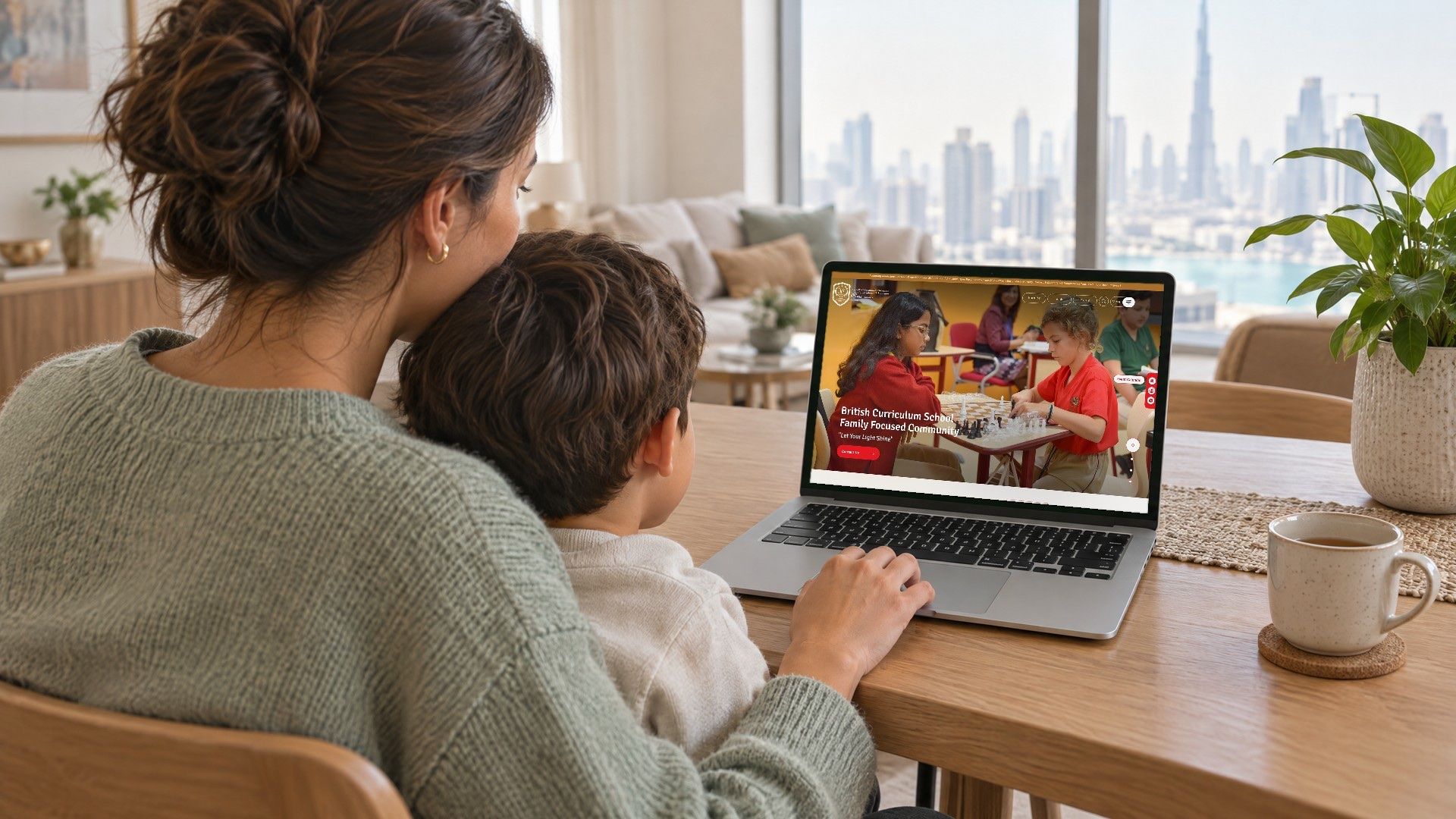
Good school website design starts with the people who use the site, not the org chart: prospective parents, current families, students, staff and, for universities, applicants from many countries. Each group arrives with a different task, and the site works when every one of them can finish that task quickly. This guide sets out an audience led structure for schools and universities in the UAE, covering admissions, regulator information, portals and events.
Why audience led school website design works better
Many education websites are organised around internal departments: About, Academics, Student Life, Administration. That mirrors how the institution is run, but it is not how visitors think. A parent relocating to Dubai thinks "Is there a Year 4 place available, and what are the fees?" A current student thinks "Where is the timetable?" A teacher applicant thinks "Are you hiring, and what is it like to work here?"
Audience led architecture puts those questions first. The top navigation and homepage signpost each group to its own path, while departmental content sits underneath where it supports those paths.
The main audiences and their top tasks
| Audience | Top tasks | What fails them |
|---|---|---|
| Prospective parents | Check curriculum, fees, availability, transport, book a tour, apply | Fees hidden in a PDF, no clear next step |
| Current parents | Calendar, term dates, portal login, uniform, lunch, announcements | Information scattered across emails and the site |
| Students | Timetables, learning platform, clubs, results, wellbeing support | Links buried three menus deep |
| Staff and applicants | Vacancies, staff portal, policies, induction information | Outdated job listings, no culture content |
| University applicants | Programmes, entry requirements, accreditation, scholarships, deadlines | Requirements that differ between pages |
| Regulators and partners | Licensing, inspection reports, policies, contact details | Missing or outdated statutory information |
Admissions pages that convert enquiries into applications
Admissions pages are where the site earns its keep. For a private school, they decide whether a family books a tour. For a university, they decide whether an applicant starts an application or moves to the next institution on the list.
What strong admissions pages include
- A clear process shown as numbered steps: enquire, visit, assess, offer, enrol.
- Year group or programme availability, updated by the admissions team, so families do not apply for a full year.
- Fees and what they cover, presented on a page rather than only in a downloadable document, in line with any regulator guidance.
- Required documents listed in one place, with notes for families moving from abroad.
- A tour or open day booking tool that confirms instantly and sends reminders.
- A named contact or team, with WhatsApp and phone options alongside the form.
The online application form
Long application forms lose families. Split them into stages, allow saving and returning later, and accept document uploads from a phone. Ask only for what admissions needs at each stage; medical details and other sensitive information can come later through a secure channel.
Hypothetical example: a school receives most enquiries between May and August from families relocating to the UAE. Its application form requires a desktop upload and times out after twenty minutes. Moving to a staged mobile form with saved progress and a confirmation message removes the main reason families abandon it.
Regulator information and statutory content
UAE education is regulated at emirate and federal level, and a credible education website reflects that. In Dubai, the Knowledge and Human Development Authority (KHDA) licenses and inspects private schools. In Abu Dhabi, the Department of Education and Knowledge (ADEK) regulates private schools across the emirate. For higher education, the Commission for Academic Accreditation under the federal ministry licenses many institutions and accredits their programmes, while some institutions based in certain Dubai zones fall under KHDA instead. Applicants and parents increasingly check these details before they enquire, so a school website in the UAE that states them clearly starts with an advantage.
What each regulator expects on a website can change, so confirm current requirements directly with the authority. In practice, families commonly look for:
- Licensing details and the curriculum offered.
- The latest inspection or quality rating, with a link to the official report.
- Key policies such as admissions, safeguarding, inclusion and complaints.
- For universities, institutional licence and programme accreditation status.
Give this content a stable home, often under a section such as "Governance and policies", and assign one owner to keep it current after every inspection cycle or policy change.
Portals: parent portal, student and staff access
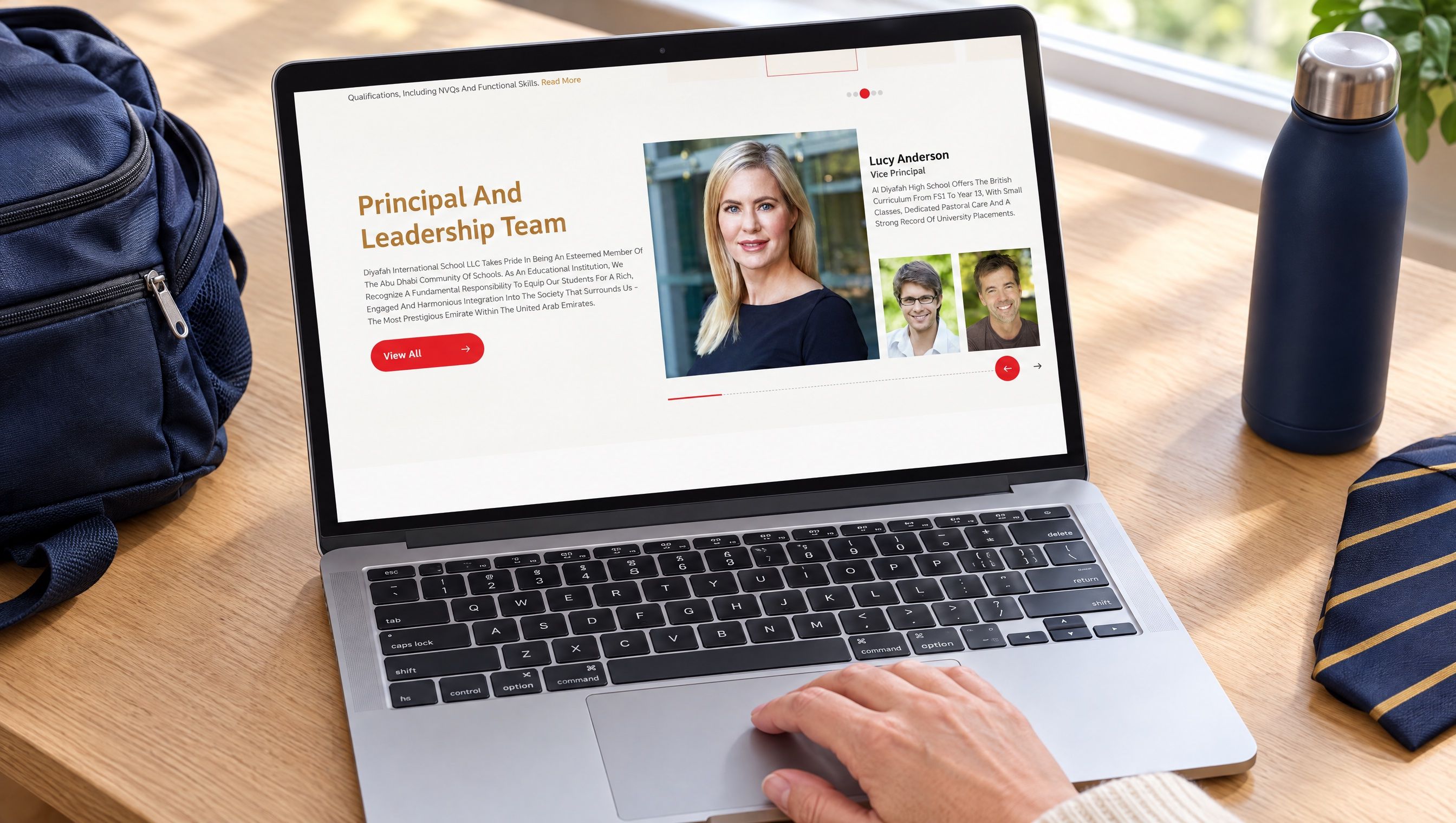
Most schools already run a management information system, a learning platform and sometimes a separate payments tool. The website should not try to replace these. Its job is to be the reliable front door.
Getting the parent portal right
- Put a clear "Parent portal" link in the header on every page, not only on the homepage.
- Use single sign on where the systems allow it, so parents do not juggle several passwords.
- Show public information (term dates, calendar, uniform) on the website, and keep personal information (reports, payments, attendance) behind login.
- Make the portal usable on a phone, because that is where most parents will open it.
Student and staff access
Students need fast routes to the learning platform, timetables and support services. Staff need the intranet, policies and HR tools. Group these in a utility menu so they do not clutter the main navigation that prospective families see.
For institutions that run their own courses or training, a learning management system can sit alongside the website. Codeeo builds and supports Codeeo LMS for this purpose, and it can be connected to the main site and to sign on.
Events, news and calendar content
Events are a strong reason for repeat visits. Open days, parent workshops, sports fixtures, graduation and university information sessions all need a calendar that is easy to filter and subscribe to.
Practical setup
- One central calendar with filters by audience (prospective families, current parents, students, alumni).
- Event pages with registration, capacity limits and automatic reminders.
- Calendar export to phone calendars so families do not have to check the site daily.
- News written for each audience, tagged so it appears in the right sections.
Keep news honest and current. A news page last updated two terms ago tells a prospective parent more about the school than any prospectus.
University website design: added layers
University website design adds complexity: many programmes, international applicants, research, partnerships and alumni. The same audience led principle applies, with a few extra layers.
- Programme finder: search by level, subject, study mode and campus, with consistent programme pages generated from one data source.
- Entry requirements by country: applicants want to know whether their qualifications are accepted without emailing.
- Accreditation clarity: state licensing and programme accreditation accurately and link to the official listing.
- Scholarships and funding: criteria, deadlines and how to apply, kept in one place.
- Research and faculty profiles: maintained by faculty through simple CMS workflows.
Programme data is where most university sites go wrong. When the same programme is described on five pages with different deadlines, applicants lose confidence. Driving programme pages from a single structured source solves this.
Arabic, accessibility and performance
An education website in the UAE often needs full Arabic and English versions, and international schools may add more languages for their communities. Plan Arabic as a proper right to left layout from the start; our guide to web design in Abu Dhabi covers why Arabic first content matters for some institutions.
Accessibility is not optional for an institution that serves children, families and staff with different needs. Follow recognised accessibility guidelines for contrast, keyboard use, captions and readable type. Speed matters too: compress photography from events and campus, and load video only on request.
Data protection for students and families
Schools and universities handle personal data about children, health and finances. The UAE Personal Data Protection Law (Federal Decree Law No. 45 of 2021) sets the general framework, and education regulators may add their own requirements. Collect the minimum on public forms, secure uploads, and confirm obligations with counsel or the regulator.
A content governance plan that keeps the site current
Most education sites decline because nobody owns updates. Before launch, agree:
- Who owns each section (admissions, academics, events, governance).
- Which content is reviewed every term, every year, and after each inspection.
- How news and events are approved and published.
- Who can edit the CMS, with roles that prevent accidental changes to statutory pages.
Research with real parents and students before design is worth the time; turning user research into better pages explains a practical method. Institutions with a clinic or health centre can borrow ideas from clinic and hospital website design, and budget planning is covered in website design cost in Dubai.
Build an education website with Codeeo
Codeeo designs and develops education websites that put admissions, portals and regulator information where families and students expect them. Our team, with an office in Dubai and 200+ projects delivered across the UAE and the US, can map your audiences, plan the structure and connect the site to your existing systems and Codeeo LMS. Explore our education sector work, web development and UI and UX design, then contact the team to discuss your institution.
Frequently asked questions
Most families expect to see fees before booking a tour, and hiding them usually creates more phone calls rather than more applications.
Present fees on a page with what they include and any additional costs such as transport or uniform, and keep the figures aligned with what the regulator has approved. Where fees vary by year group, a simple table is clearer than a long downloadable document.
Web DevelopmentWordPress VIP or Self Hosted Enterprise WordPress in the UAEWordPress VIP or self hosted enterprise WordPress in the UAE: compare data residency, hosting SLA, cost drivers and code review rules, plus key setup notes. Web DevelopmentWhat a WordPress Maintenance SLA Should CoverWhat WordPress maintenance services should cover in writing: core and plugin updates, security, backups, multilingual publishing support and response times.
 Web DevelopmentWordPress Release Management: Staging, QA and RollbackA WordPress deployment workflow that releases safely: Git based builds, a staging site that mirrors live, smoke tests to run and a rollback plan written first.
Tell us what the business needs. We will tell you what to build first.
Schedule a free consultation and get a written recommendation, with costs, before you commit to anything.
Get in touchPROVEN RESULTS
4.7 / 5verified reviews on Google