 SEORecovering Traffic After a Failed Website MigrationSEO recovery after migration in the right order: diagnose the traffic drop, fix redirects, rebuild internal links, request reindexing, then report progress.
Keyword Clustering: Mapping Many Keywords to the Right Pages
Keyword clustering with the SERP overlap method: group terms by shared results, map each cluster to one page, avoid cannibalisation, with a worked example.
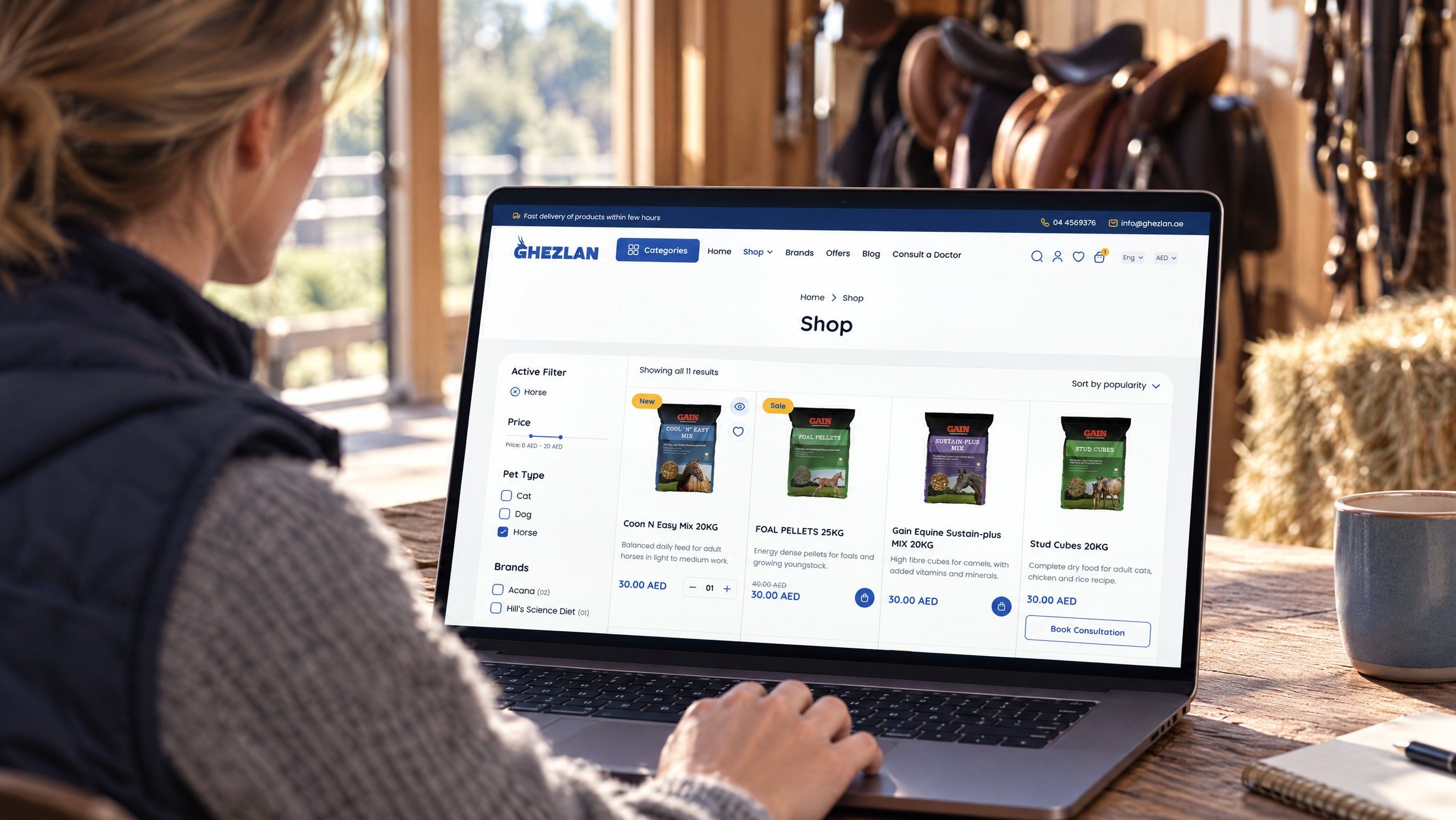
Keyword clustering is the process of grouping search terms that can be answered by the same page, so each page targets one need and no two pages compete. The most reliable way to do it is to compare the search results: if two keywords return mostly the same URLs on Google, they belong together. This guide explains the SERP overlap method step by step, with a worked example for a service business.
Why keyword clustering matters before you write or design
A keyword list on its own does not tell you how many pages to build. Without grouping, teams tend to make one of two mistakes:
- Too many pages. Separate pages for "office fit out Dubai", "office fit out company Dubai" and "office interior fit out" end up thin and nearly identical. They split links and signals, and Google may show none of them prominently.
- Too few pages. One broad service page tries to rank for informational questions, comparisons and location searches at once, and satisfies none of them well.
Google's own documentation notes that when many matching pages are very similar, its systems show only the most relevant ones, and that it generally avoids showing more than two listings from the same site in top results, as set out in the guide to Google Search ranking systems. Building near duplicate pages for every variant works against that.
Keyword grouping by topic versus by results
Keyword grouping by topic, done by eye, puts terms together because they sound related. That is a reasonable first pass but it is often wrong. "Website maintenance" and "website support" sound alike, yet the results may show different kinds of pages. Grouping by the results uses Google's current view of intent as the deciding factor, which is closer to what you need for ranking.
The SERP overlap method, step by step
SERP overlap compares the top organic results for two keywords and counts how many URLs they share. The more they share, the more likely one page can rank for both.
Step 1: build and clean the list
Collect keywords from Search Console, keyword research tools, sales conversations and People Also Ask. Our guide to finding long tail keywords UAE buyers search covers those sources. Remove duplicates, misspellings and terms for services you do not offer.
Step 2: collect the results for each keyword
For each keyword, record the top ten organic URLs for the location you care about, such as the UAE, in English or Arabic as appropriate. For small lists, search manually in a private window with the right location. For larger lists, rank tracking and SEO tools can export result URLs in bulk.
Step 3: compare pairs and count shared URLs
Take the keyword with the most demand as the anchor. For every other keyword, count how many of its top ten URLs also appear in the anchor's top ten. A working rule used by many SEO teams is:
| Shared URLs in the top ten | What it usually means | Action |
|---|---|---|
| 4 or more | Same intent | Same page |
| 2 to 3 | Related but distinct, or mixed intent | Check the page types; often a section or a linked supporting page |
| 0 to 1 | Different intent | Different page, or not worth targeting |
These thresholds are a practical convention, not a Google rule. Adjust them if your results are dominated by directories or marketplaces, which can inflate the overlap.
Step 4: look at page types, not just URLs
Two keywords can share few URLs but show the same kind of page, such as agency service pages, or the reverse. Note the dominant format for each cluster: service page, comparison article, list, guide, product category or local listing. That format becomes the brief for the page.
Step 5: name each cluster and assign it to one URL
Give each cluster a primary keyword, usually the term with the clearest commercial intent or highest demand, and map it to one existing or planned URL. Every other keyword in the cluster becomes a secondary term, a heading or an FAQ on that page.
Worked example: a fit out company in Dubai
Hypothetical example: an interiors and fit out firm in Dubai has twelve keywords it wants to target. After collecting the top ten UAE results for each and counting shared URLs against the anchor terms, it ends up with four clusters.
| Cluster and page | Keywords grouped | Dominant result type |
|---|---|---|
| Office fit out service page | office fit out dubai; office fit out company dubai; commercial fit out contractors dubai; office interior fit out | Contractor service pages |
| Restaurant fit out service page | restaurant fit out dubai; cafe fit out dubai; kitchen fit out for restaurants | Specialist contractor pages with project galleries |
| Guide: approvals and process | fit out approval process dubai; fit out permit timeline; landlord fit out guidelines | Guides and authority pages |
| Guide: what drives fit out cost | office fit out cost per square foot; fit out budget planning | Articles and calculators |
Two findings changed the plan. First, "office interior fit out" initially looked like a candidate for its own design page, but it shared most of its results with the office fit out anchor, so it became a section rather than a separate page. Second, "cafe fit out" overlapped heavily with restaurant terms, so the firm did not need a separate cafe page. The approvals cluster pointed to government and landlord pages, so the guide was written to explain the process in general terms and tell readers to confirm current requirements with the relevant authority.
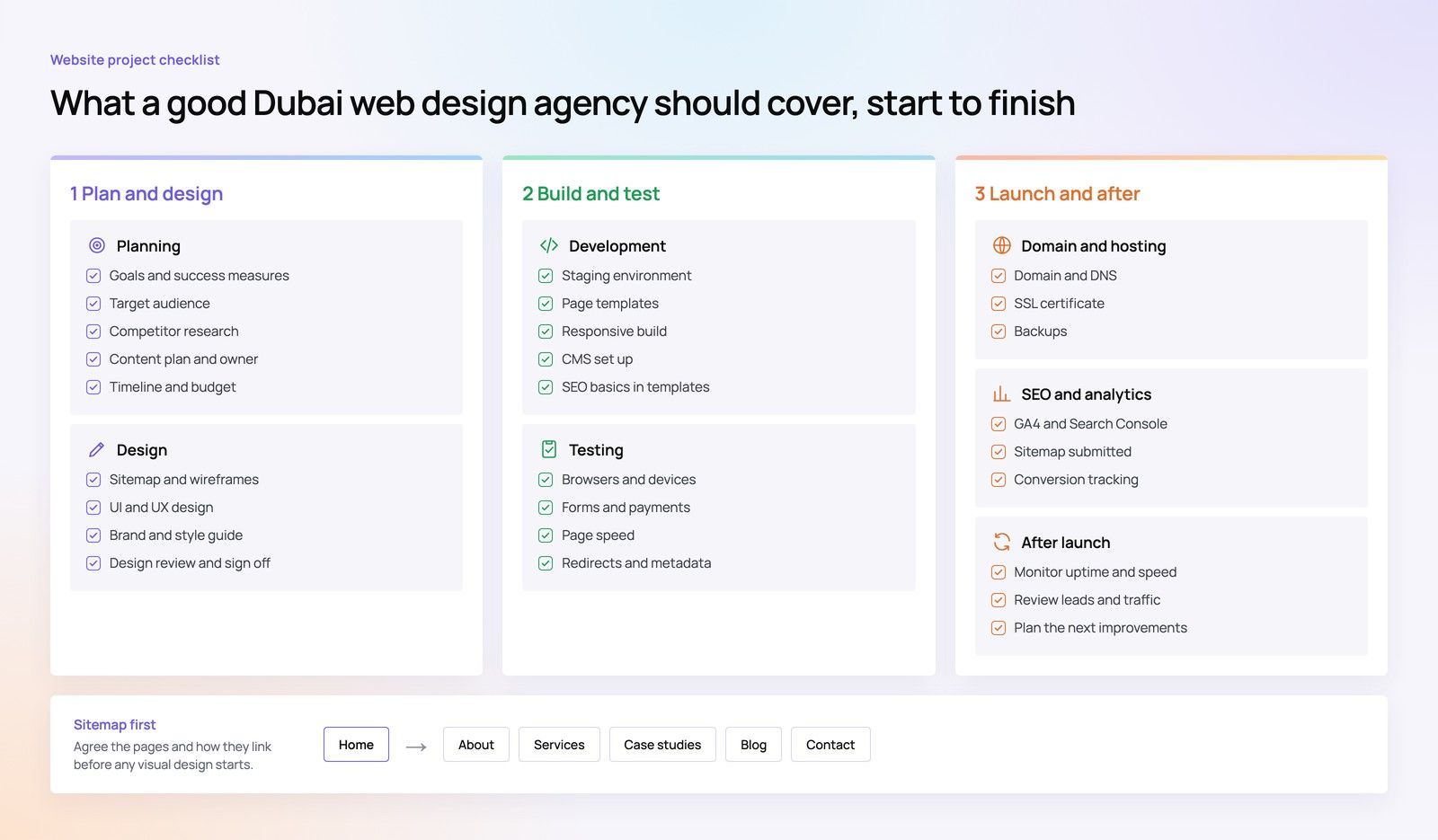
Content mapping: from clusters to a site structure
Content mapping is where clusters become a sitemap. Put the clusters in a sheet with these columns: cluster name, primary keyword, secondary keywords, intent, page type, target URL, status (exists, update, create) and the pages it should link to.
Map existing pages first
Before creating anything, match clusters to pages you already have. Search Console shows which URLs already get impressions for terms in each cluster. Improving a page that Google already associates with the topic is usually faster than starting a new one.
Plan hub and supporting pages
Commercial clusters usually map to service or category pages. Informational clusters map to guides that link back to the service they relate to. This structure gives the service page internal links from relevant content and gives readers a clear next step.
Bilingual sites
Run the overlap check separately for Arabic keywords. Arabic searches can return different result types from their English equivalents, so the clusters may not match one to one. Our guide to bilingual SEO for Arabic and English pages covers how to pair the two versions.
Keyword cannibalisation: finding and fixing clashes
Keyword cannibalisation happens when two or more of your pages target the same cluster and compete for it. Signs include rankings that swap between URLs, two pages sharing impressions for the same query in Search Console, and neither page holding a stable position.
Choosing the fix
- Merge and redirect when both pages cover the same need. Combine the best content on the stronger URL and permanently redirect the weaker one.
- Differentiate when the pages could serve different intents. Rewrite one to target a separate cluster and adjust its title and headings.
- Canonicalise when near duplicate pages must exist for practical reasons, such as filtered product listings.
- Fix internal links so menus, breadcrumbs and in content links point to the chosen page with consistent anchor text.
On large sites, cannibalisation often appears during a rebuild, when old and new templates overlap. The governance points in our article on SEO and UX governance in enterprise rebuilds help prevent that.
Tools and their limits
Several SEO platforms offer automated keyword clustering based on SERP overlap, and they save time on lists of hundreds or thousands of terms. Check a sample of their clusters manually, because results change by location, device and date, and tools may not collect UAE results by default. Semantic clustering, which groups by meaning using language models, is quick but does not reflect what Google ranks, so use it as a first pass only. For how AI tools fit into this kind of work more broadly, see how AI is changing web design and SEO work.
Turn your keyword list into a site plan
Codeeo's SEO team clusters keywords using search result data, maps them to existing and new pages and flags cannibalisation, and the web development team can build the resulting structure into a new or rebuilt site. If you are not sure where to start, a website audit reviews your current pages against search demand. Contact Codeeo to discuss your keyword list.
Frequently asked questions
As many as genuinely share intent.
Some clusters hold two terms; others hold thirty variants of the same need. Size is less important than coherence: if one page could answer every query in the cluster without feeling stretched, the cluster is right. If the page would need to change format for some terms, split them out.
SEORecovering Traffic After a Failed Website MigrationSEO recovery after migration in the right order: diagnose the traffic drop, fix redirects, rebuild internal links, request reindexing, then report progress. SEOPlanning an Enterprise Rebuild That Keeps SEO, UX and GovernancePlan an enterprise website rebuild that protects rankings, user tasks and content governance, with one shared inventory, phase gates and agreed launch criteria.
 SEOProtecting Lead Flow During a Redesign, Not Only RankingsAvoid a website redesign conversion drop: map lead paths, rebuild form tracking, protect ad landing pages and test CRM integration before and after launch day.
Tell us what the business needs. We will tell you what to build first.
Schedule a free consultation and get a written recommendation, with costs, before you commit to anything.
Get in touchPROVEN RESULTS
4.7 / 5verified reviews on Google