 SEORecovering Traffic After a Failed Website MigrationSEO recovery after migration in the right order: diagnose the traffic drop, fix redirects, rebuild internal links, request reindexing, then report progress.
Finding Long Tail Keywords UAE Buyers Actually Search
How to find long tail keywords UAE buyers use: Search Console queries, sales and WhatsApp notes, People Also Ask, local and Arabic variants, and what to target.

Long tail keywords are the specific, lower volume searches people type when they know roughly what they need, such as "physiotherapy for frozen shoulder in Al Barsha" rather than "physiotherapy". The best ones for a UAE business usually come from data you already hold: Search Console queries, sales call notes and customer messages, then checked against the search results themselves. This guide shows where to find them and how to decide which deserve a page.
Why long tail keywords suit UAE buyers
Each long tail query is searched far less often than a broad term, but together they make up a large share of searches, and they carry more intent. Someone searching "corporate website redesign with Arabic version" has already decided several things. A page that answers exactly that question has a better chance of ranking and a better chance of turning the visit into an enquiry.
Length is not the point. A three word phrase can be specific ("Shopify developer Sharjah"), and a seven word phrase can be vague. What makes a keyword "long tail" is that it narrows the need: a service, a problem, a place, a constraint or a stage in the buying decision.
Common shapes of a useful long tail query
- Service plus location: "pediatric dentist JLT", "accounting software for clinics Abu Dhabi".
- Service plus constraint: "WooCommerce store with Tabby and Tamara", "website in English and Arabic".
- Problem statements: "website not showing on Google Maps", "Shopify checkout slow on mobile".
- Comparison and evaluation: "Odoo vs Dynamics for trading company", "agency or freelancer for website".
- Questions: "how long does a clinic license take", "what to include in an RFP for a website".
Long tail keyword research from data you already own
Search Console: queries you already appear for
Google Search Console's Performance report lists the queries that triggered your pages, with clicks, impressions and average position, as set out in Google's documentation. This is the richest long tail source for any established site, because it shows real searches where Google already considers you relevant.
- Set the date range to the last three to six months and filter the country to the United Arab Emirates.
- Use the query filter with "contains" for words such as how, what, which, best, near, cost, vs and the names of areas you serve.
- Sort by impressions and look for queries with impressions but few clicks. These are needs Google thinks you might meet, but your page does not yet answer clearly.
- Click each promising query and open the Pages tab to see which URL is showing. That tells you whether to improve an existing page or create a new one.
The same report supports the wider reporting routine described in our guide to SEO data that guides decisions.
Sales calls, WhatsApp chats and emails
The words customers use when they call or message are often the exact words they typed into Google first. Ask the sales or front desk team to note the opening question of each enquiry for a month. In the UAE, a lot of first contact happens on WhatsApp, so export or review those chats too, with appropriate care for personal data.
Look for repeated phrasing. If ten people ask "do you handle the Arabic version as well", that is a strong signal for a page or section, even if a keyword tool shows little volume.
Site search, chat widgets and support tickets
If your site has a search box or live chat, its logs show what visitors could not find. Support tickets and returns notes do the same for ecommerce: "does this charger work with" and "size guide for" queries often reveal product page gaps.
Reading the search results for question keywords
Once you have a list of seed phrases, search them and study what Google shows. The results page removes guesswork in one important way: it shows what Google currently thinks the searcher wants.
People Also Ask and related searches
The People Also Ask box expands into further questions each time you open one. Record the questions that a buyer would genuinely ask before contacting you, and skip those that are purely academic. Related searches at the bottom of the page show how people refine a query.
Autocomplete
Google states that autocomplete predictions reflect real searches and take account of language and location, among other factors, according to Google Search Help. Typing a seed phrase followed by each letter of the alphabet, or by words like "for", "with" and "near", surfaces common variations. Predictions are also shaped by the searcher's own history, so check them in a private window.
Turning questions into content formats
| Question type | Example | Best home for the answer |
|---|---|---|
| How long or how much effort | How long does a Shopify migration take? | A section on the service page, plus an FAQ |
| Comparison | WordPress or Webflow for a law firm? | A dedicated comparison article |
| Problem diagnosis | Why is a business not showing on Google Maps? | A troubleshooting guide linking to the service |
| Eligibility or requirement | Is a trade licence needed to sell on Instagram? | An article that points readers to the official authority |
| Process | What happens after a website brief is submitted? | A process page or a section on the contact page |
Local keywords in Dubai and across the UAE
Local keywords Dubai buyers use are rarely just "in Dubai". People search by area (Business Bay, JLT, Al Quoz, Dubai Silicon Oasis), by landmark, by business district and by emirate. For Abu Dhabi, Sharjah and the northern emirates, spelling varies: Al Khan, Alkhan; Musaffah, Mussafah. Collect the variants your customers actually use from Search Console and your Google Business Profile insights.
Arabic variants and transliterations
Many UAE searches mix languages, or use Arabic words typed in Latin script. Arabic keyword research deserves its own process, because the phrasing, dialect and intent often differ from a direct translation of the English term. Our separate guide on Arabic keyword research covers that in depth; for long tail work, the main step is to check each priority English phrase for an Arabic equivalent and search it to see whether the results show the same intent.
If a local term has real demand, it usually belongs on a location or service page that genuinely serves that area. For businesses that depend on nearby customers, local SEO covers the Google Business Profile and location pages that these terms feed into.
What keyword research tools add, and where they mislead
Keyword research tools are useful for expanding a seed list, estimating relative demand and seeing which competitors rank. Their limits matter for long tail work in the UAE:
- Volume figures are estimates. For narrow UAE phrases, many tools show zero or a low band even when Search Console proves people search the term.
- Arabic and mixed language queries are often underrepresented.
- Difficulty scores are based on backlinks, not on how well existing pages answer the question.
Treat tool data as a guide to which variants exist, and use your own data to judge which matter. Search is also changing as AI answers appear in results; our article on staying visible in AI search explains how specific, well structured answers fit into that shift.
Deciding which long tail keywords deserve a page
Most long tail keywords should not get their own page. Grouping them correctly is what stops thin, competing pages. Use three questions:
- Does the search result show the same pages as a broader term you already target? If yes, add it as a section or FAQ on that page.
- Does it need a different format? A comparison or a troubleshooting guide usually needs its own article.
- Would a customer searching it convert? Prioritise phrases that match services you offer and areas you serve.
The method for grouping many phrases is covered in our guide to keyword clustering and mapping keywords to pages.
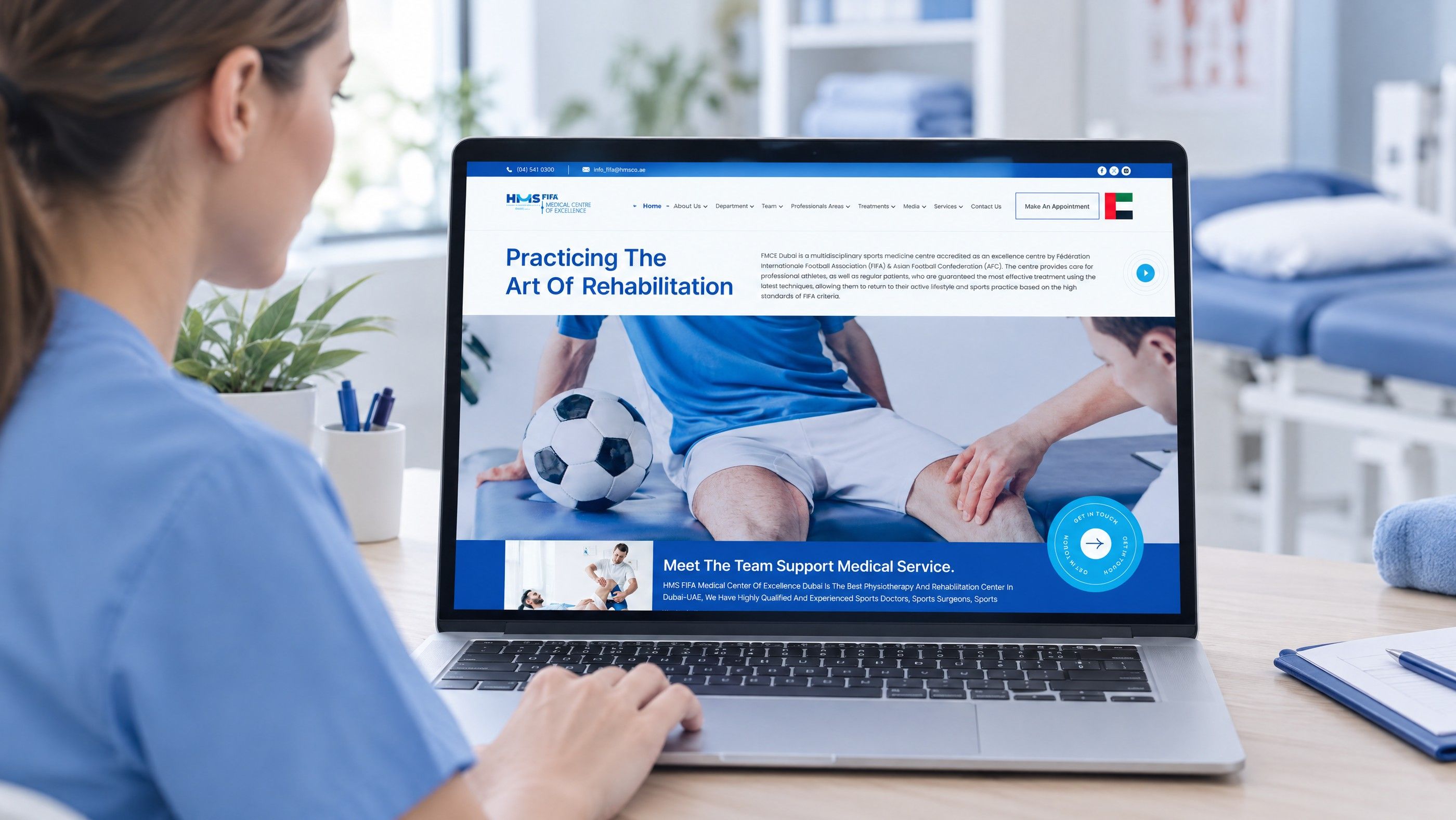
Hypothetical example: a rehabilitation clinic in Dubai reviews three months of Search Console data and finds impressions for "physiotherapy after ACL surgery", "sports massage vs physiotherapy" and several area based searches. The front desk notes show patients often ask whether sessions can be done at home. The clinic adds a post surgery section to its physiotherapy page, publishes one comparison article, and creates a home visit page only after checking it can genuinely offer the service in those areas.
Get help finding the searches that bring enquiries
Codeeo's digital marketing and SEO team runs long tail keyword research from your own data, maps it to pages and writes or briefs the content, including for healthcare providers and other specialist service businesses. Codeeo has delivered 200+ projects across the UAE and the US, and the team can meet you at the Dubai office. Contact Codeeo to review your current queries.
Frequently asked questions
There is no fixed number.
A strong page often ranks for dozens or hundreds of related phrases because they share one intent. Instead of counting keywords, choose one main need per page and cover the questions around it. If two phrases show mostly different results in Google, they usually need different pages; if the results overlap heavily, one page can serve both.
SEORecovering Traffic After a Failed Website MigrationSEO recovery after migration in the right order: diagnose the traffic drop, fix redirects, rebuild internal links, request reindexing, then report progress. SEOPlanning an Enterprise Rebuild That Keeps SEO, UX and GovernancePlan an enterprise website rebuild that protects rankings, user tasks and content governance, with one shared inventory, phase gates and agreed launch criteria.
 SEOProtecting Lead Flow During a Redesign, Not Only RankingsAvoid a website redesign conversion drop: map lead paths, rebuild form tracking, protect ad landing pages and test CRM integration before and after launch day.
Tell us what the business needs. We will tell you what to build first.
Schedule a free consultation and get a written recommendation, with costs, before you commit to anything.
Get in touchPROVEN RESULTS
4.7 / 5verified reviews on Google