 Web DevelopmentWordPress VIP or Self Hosted Enterprise WordPress in the UAEWordPress VIP or self hosted enterprise WordPress in the UAE: compare data residency, hosting SLA, cost drivers and code review rules, plus key setup notes.
Template or Custom Design: Working Out the Real Return
Custom website vs template, compared over three years: the cost lines most quotes miss, where returns come from, and how to find your break even point in Dubai.
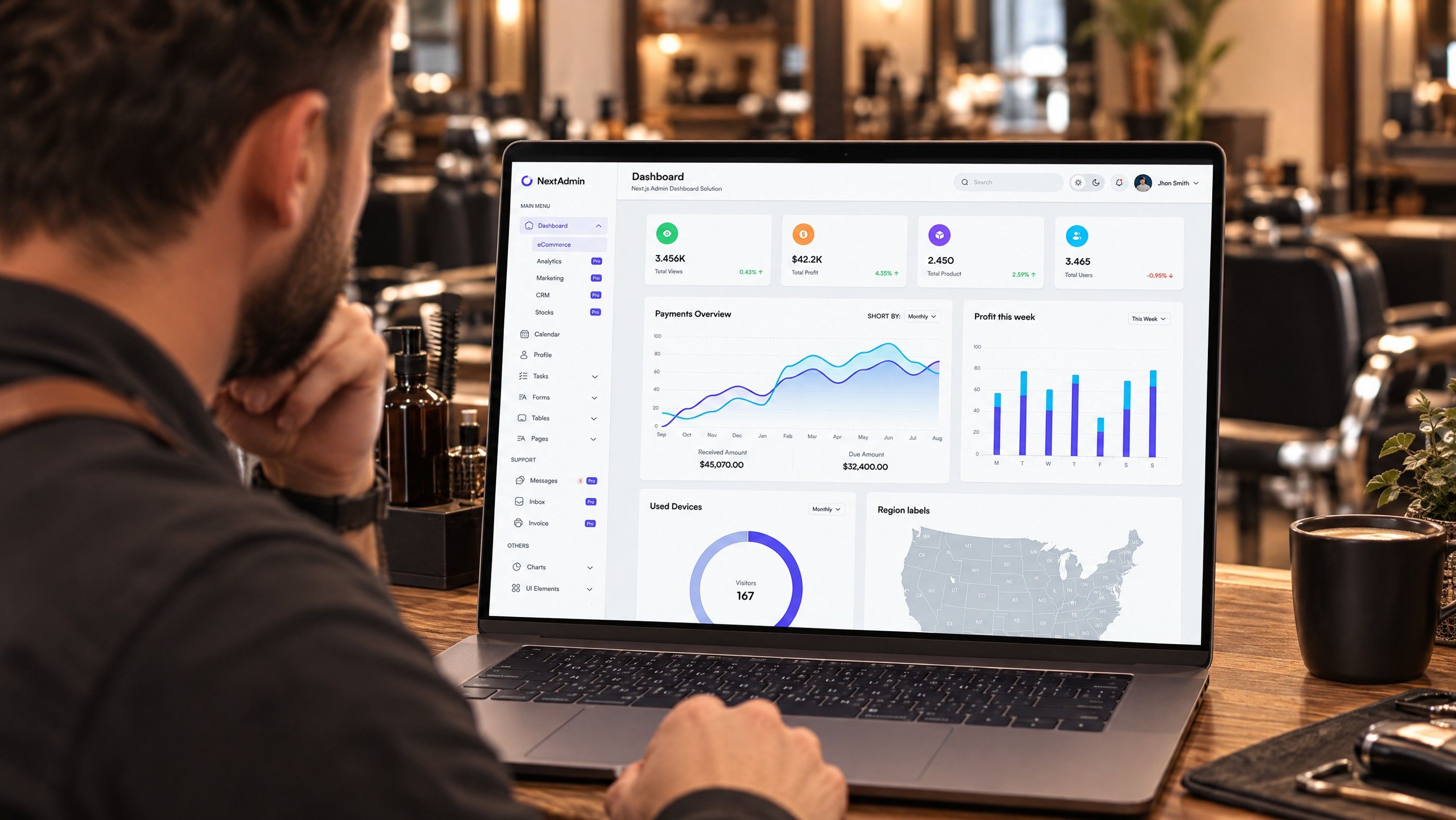
Choosing between a custom website vs template comes down to total cost and return over about three years, not the launch invoice. A stock theme is cheapest to start but tends to cost more in workarounds and lost enquiries as the business grows; a full custom build costs most upfront and pays back only when the site has real work to do. For many growing SMEs, a customised theme or a focused custom build sits at the break even point.
This article sets out a simple model you can fill in with your own quotes and figures, so the decision rests on your numbers rather than on an agency's preference.
Three options, defined clearly
The words "template" and "custom" are used loosely, so it helps to separate three distinct routes.
Stock theme
A ready made theme from a marketplace or platform store, installed with minimal changes. You swap in your logo, colours, text and images. Layouts, components and behaviour stay as the theme author designed them.
Customised theme
A purchased theme used as a starting point, with a developer adjusting templates, adding sections, removing unused features and connecting it to your systems. You still depend on the theme author's updates for the core code.
Full custom build
A design created for your brand and content, then built as your own theme or front end on a platform such as WordPress, Shopify or a headless setup. Your team or agency owns and maintains the code.
Custom website vs template: the cost lines most comparisons miss
Launch cost is the most visible number and often the least important. Over three years, these lines matter just as much.
| Cost line | Stock theme | Customised theme | Full custom build |
|---|---|---|---|
| Initial design and build | Low | Medium | High |
| Theme licence and support renewals | Ongoing | Ongoing | None for the theme itself |
| Plugin and app subscriptions | Often high, to fill feature gaps | Medium | Lower, features built to fit |
| Update and compatibility fixes | Frequent; theme updates can break edits | Frequent; custom changes must be retested | Planned; you control release timing |
| Workarounds for new requirements | High and rising | Medium | Low |
| Redesign or rebuild within three years | Likely | Possible | Less likely; sections evolve instead |
Website template cost is more than the licence
The licence is usually a small line. The real website template cost sits in support and compatibility. Marketplace themes often come with a limited support period; on ThemeForest, for example, item support runs for six months from purchase and must be extended or renewed after that. When the theme author releases an update, every customisation needs retesting. If the author stops maintaining the theme, you are left with code nobody is responsible for.
Theme limitations that turn into cost
- Bundled features you do not use. Many themes ship with sliders, page builders and demo content that add page weight and slow the site.
- Rigid layouts. Adding a new content type, such as a project gallery with filters, may need a plugin plus custom CSS rather than a clean template.
- Arabic support. Some themes claim right to left support but break on custom sections, so bilingual sites need extra fixes.
- Integration gaps. Connecting a theme to a CRM, ERP or booking system often relies on several plugins with their own update cycles.
The return side: what a site earns back
Cost alone does not decide the question. Custom web design ROI comes from what the site does better, not from looking different for its own sake.
Revenue and lead drivers
- Conversion rate. Clear page structure, faster loading and forms designed for your sales process all affect how many visitors become enquiries.
- Lead quality. Qualifying questions, service specific landing pages and CRM routing help sales teams spend time on the right prospects.
- Search visibility. Clean code, sensible URL structures and fast pages support organic traffic, which compounds over three years.
Brand differentiation
In crowded UAE categories such as real estate, clinics, education and professional services, many competitors use the same popular themes. Brand differentiation matters most when buyers compare several providers side by side before calling. If your sales depend on referrals and the site is mainly a credibility check, differentiation is worth less.
Operational savings
A site that publishes in both languages from one workflow, sends enquiries straight into the CRM and lets marketing create pages without a developer saves staff time every week. Those hours are part of the return.
Building a three year model for your business
Use this method with real quotes. Keep it simple: a spreadsheet with three columns, one per option, and a row for each year.
- Year zero costs. Enter design, build, content and launch quotes for each option.
- Recurring costs. Add hosting, theme support renewals, plugin or app subscriptions and maintenance retainers for each year.
- Expected change requests. List the features you already know you will need within three years: Arabic, a new service line, an online booking flow, a client portal. Ask each provider to estimate them on their option.
- Rebuild risk. If an option is likely to need replacing within the period, add that rebuild to the year it is expected.
- Return estimate. Using your current enquiry volume, average deal value and close rate, estimate how many extra qualified enquiries each option needs to generate to cover its extra cost.
- Find the break even point. Compare cumulative cost minus cumulative return for each option, year by year. The break even point is where the higher upfront option overtakes the cheaper one.
The useful insight is usually not the final number but the question it forces: how many additional good enquiries would justify the custom option? If the answer is a handful a year and your deal values are high, custom work pays back quickly. If you would need a large jump in leads with low value sales, a stock or customised theme is the sensible choice.
Count internal time, not only invoices
Most models leave out the hours your own team spends on the site. Record how long marketing waits for developer help to publish a page, how often someone copies enquiries by hand from email into the CRM, and how much time goes into keeping English and Arabic versions aligned. Multiply those hours by a reasonable internal rate and add them to the recurring costs for each option. On theme based sites with several plugins, this line can outweigh the hosting and licence lines, and it tends to grow as the business adds services, staff and languages.
Hypothetical example: a Dubai consultancy
Hypothetical example: a twelve person business consultancy in Dubai sells high value engagements and wins most clients after they compare three or four firms online. It needs English and Arabic pages, service pages for each practice area and enquiries routed into its CRM.
- A stock theme launches fastest, but Arabic pages need fixes, CRM routing relies on two plugins and new practice pages require developer time each quarter. By year two a redesign is under discussion.
- A customised theme handles the bilingual layout and CRM routing, but every theme update needs testing, and the design looks close to two competitors using the same base.
- A full custom build costs most at launch, yet marketing can add practice pages independently, enquiries arrive qualified, and no rebuild is planned within three years.
For this firm, a couple of extra engagements over three years would likely cover the gap, so the custom option breaks even early. A café with a menu and location page would reach the opposite conclusion.
Signals that point to each option
| Choose | When |
|---|---|
| Stock theme | Tight launch window, simple content, low deal values, one language, site mainly confirms you exist |
| Customised theme | Standard structure suits you, but you need integrations, bilingual content or a few unique sections |
| Full custom build | High value sales, strong competition online, several integrations, frequent new content types, long term ownership matters |
If you are unsure whether you already need more than a theme, our guide on where low code and no code sites break covers the same warning signs from a platform angle. For budgeting, see paying for design versus build in Dubai and where the development hours go. If part of the return case depends on a mobile experience, the piece on when a progressive web app beats a native app is worth reading alongside this one.
Get a like for like comparison from Codeeo
Codeeo works across all three routes, so the recommendation follows your model rather than a preferred approach. Our UI/UX design team creates brand led designs, our website design and development service builds them on the right platform, and our WordPress developers can extend an existing theme where that is the better value. If you already have a site, a website audit shows which costs and limits you are carrying today.
We have delivered 200+ projects across the UAE and the US and hold a 4.7 rating from 23 Google reviews. Our office is in Dubai, so you can bring your figures and work through the comparison with the team in person. Contact Codeeo to request quotes for each option on the same scope.
Frequently asked questions
Yes, and it is a reasonable plan if you budget for it.
Keep content structured cleanly, avoid building key pages with a theme's proprietary shortcodes, and document every plugin you add. That makes it easier to lift content into a custom theme later. Moving from a heavily modified theme is often harder than moving from a lightly used one.
Web DevelopmentWordPress VIP or Self Hosted Enterprise WordPress in the UAEWordPress VIP or self hosted enterprise WordPress in the UAE: compare data residency, hosting SLA, cost drivers and code review rules, plus key setup notes. Web DevelopmentWhat a WordPress Maintenance SLA Should CoverWhat WordPress maintenance services should cover in writing: core and plugin updates, security, backups, multilingual publishing support and response times.
 Web DevelopmentWordPress Release Management: Staging, QA and RollbackA WordPress deployment workflow that releases safely: Git based builds, a staging site that mirrors live, smoke tests to run and a rollback plan written first.
Tell us what the business needs. We will tell you what to build first.
Schedule a free consultation and get a written recommendation, with costs, before you commit to anything.
Get in touchPROVEN RESULTS
4.7 / 5verified reviews on Google